IEC Releases the 2018 Environmental Executive Report
Report includes backgrounds on key environmental issue areas and specific recommendations for how the Governor can protect the environment in their role. Click here if the form fails to load.
Report includes backgrounds on key environmental issue areas and specific recommendations for how the Governor can protect the environment in their role. Click here if the form fails to load.
Breaking a long trend of cuts and unspent appropriations, natural resources finally received improved funding in the FY19 Illinois budget and capital budget. One especially heartening development will see the operating budget for the Illinois Department of Natural Resources increase 6.7% compared to FY18. A major highlight of the capital plan is the dedication of $37 million towards the Conservation Reserve Enhancement Program, which is a federal matching program that awards funding to farmers to enter important acres into conservation. Illinois has not used this program since 2006. Depending on the match rate in the still-pending Farm Bill, Illinois could see up to $160 million in federal match funding from our $37 million contribution. This popular program will provide new habitat, filter nutrient pollution through buffers to rivers and streams, and protect Illinois’ soil health. And while it will take time to build this program back up, it is a
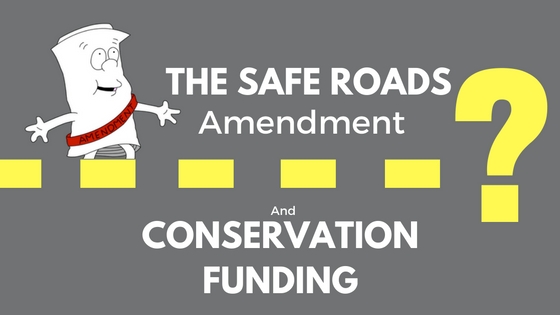
The proposed constitutional amendment could have unintended consequences for conservation in Illinois. You can read the Safe Roads Constitutional Amendment in its entirety here. This amendment to Illinois’ constitution purports to keep the gas tax in a “lockbox” that can only be used for transportation, and comes in response to significant sweeps from the road fund to pay for other services. The actual text of the amendment – which will be added to the Constitution if it gets more than 60% of the vote – would direct any fee, excise, or tax related to vehicles or licenses to transportation causes. In 2012, the Illinois environmental community worked to pass a $2 fee on license plates to fund the Illinois Department of Natural Resources. This fee on every plate results in a significant percentage of the IDNR conservation budget each year. If this amendment passes, the impact on conservation programs is
The Illinois House and Senate passed and the Governor signed a six month stop gap budget which ends December 31, 2016. While this is progress, passing a budget in the second half of FY17 will be difficult as the legislature will likely have to consider additional revenue. This budget covers many line items related to the environment and conservation, including some appropriations left unfunded from FY16. Read on to learn more: Pollution Soil and Water Conservation Districts were funded at $2.8 million. SWCD programs protect soil from eroding and reduce nitrogen and phosphorous loss into Illinois’ waterways. Funding was allocated to the Water Revolving Fund, meaning that these important stormwater infrastructure projects might proceed. Great Lakes Restoration Initiative funding from the federal government has been appropriated for important coastal management projects. While funding was allocated to the DCEO recycling division, it seems that funding will only cover administrative costs and
Well into the FY16 fiscal year, the state of Illinois still does not have a budget and the impasse is having a severe negative impact on conservation and environment programs. It’s hard to measure the full impacts these cuts, sweeps, and delays are having on the environment, economy, and quality of life of all Illinoisans, but IEC has attempted to compile a list (see below). In hard budgetary times, conservation and environmental programs are often the first to be trimmed, despite their contributions to the economy and Illinoisans’ quality of life. Further, sweeping special funds is not a permanent solution to fund the Illinois budget. Using these funds to pay for basic services is not sustainable and these sweeps also hurt businesses, such as solar energy companies. We urge legislators and the Governor to pass a budget and sufficient additional revenue to fully fund a year long budget that prioritizes
Governor Rauner introduced his proposed FY16 budget on Wednesday during his budget address. This budget is $4.2 billion or 12% lower than FY15 and many agencies and programs will receive steep cuts. You can view the proposed budget here. We are still analyzing the budget, but a few items of note on a first review: DNR’s budget is cut by $18 million, which is a 27% cut to their General Revenue Fund dollars or a 6.5% decrease in the entire DNR budget. The state parks remain funded at close to FY15 levels, but there are stark cuts to the Conservation Police as well as other IDNR programs. IEPA’s budget does not rely on General Revenue Funds and instead on fees, permit fees, and fines and remains level for FY16. DCEO’s Energy office seems to have been cut in its entirety. All renewable energy and energy efficiency programs, as well as funds
The environment is under assault by the General Assembly this week. There are a seemingly unprecedented number of anti-environment measures up for consideration this week. Here are the biggest threats we face this week and what you can do about them: Gutting of Illinois fracking law. On Friday, we sent you an action alert on SB649. Amendments to this bill completely re-write the Illinois fracking law and would end the public process that is already ongoing to write rules for environmental regulations of fracking. This bill is posted to be heard at 3PM today. Take action here. Funding and Authority for Illiana Tollroad. The Illiana Tollroad threatens the Midewin Tallgrass National Prairie and is a $250 million bad transportation decision for the state. Take action with ELPC or Sierra Club to ask your legislators to oppose this “Road to Nowhere.” Oppose New Subsidies to Nuclear Power. HR1146, a resolution introduced last
We are just a couple of weeks into the year and 2012 is shaping up to be an interesting year for state parks. Unfortunately, this is not simply a year to celebrate the natural wonders of our state parks. This is the year that we are going to have to work together to protect and defend our state parks. Challenges to our state parks are coming at many levels. Today, the LaSalle County Board will vote on a proposal to allow Mississippi Sands LLC to operate a sand mine just outside of the east gates of Starved Rock State Park. Mining operations will have many negative effects on the state park. The Illinois Sierra Club and many of IEC’s affiliates have been working to ask the LaSalle County Board to vote against this proposal. Take action with the Illinois Sierra Club here and watch for updates through their twitter feed. The meeting is
Though it’s still early, 2009 is shaping up to be the year in which environmental and economic realities finally intersect in meaningful way on the national and state political stage.
Priorities for a Healthful Illinois: 2009 Illinois Environmental Briefing Book offers specific policies and legislative action for top environmental priorities:
Governor Blagojevich presented his FY2006 budget proposal on Wednesday. His proposal recognizes the difficulties at the Illinois Department of Natural Resources (IDNR), and while not reversing all of the cuts, begins to take a step back. The Governor is supporting Lt. Gov. Pat Quinn’s proposal to eliminate a tax credit for landfill operators and use the money instead to support conservation programs. The budget includes $2.2 million to hire 50 site technicians at state parks, 14 of whom would be recalled from the recent layoff and 36 new positions. The Conservation Reserve Enhancement Program (CREP) is slated to receive $10 million, and Conservation 2000 gets $6.4 million plus about $7 million for project grants. Natural Areas Acquisition Fund (NAAF) is receiving about $1.5 million in new funding, while the Open Space Land Acquisition and Development (OSLAD) fund remains at last year’s level. It was in last year’s budget address that