
Kate Katauskas
Communications and Campaigns Fellow
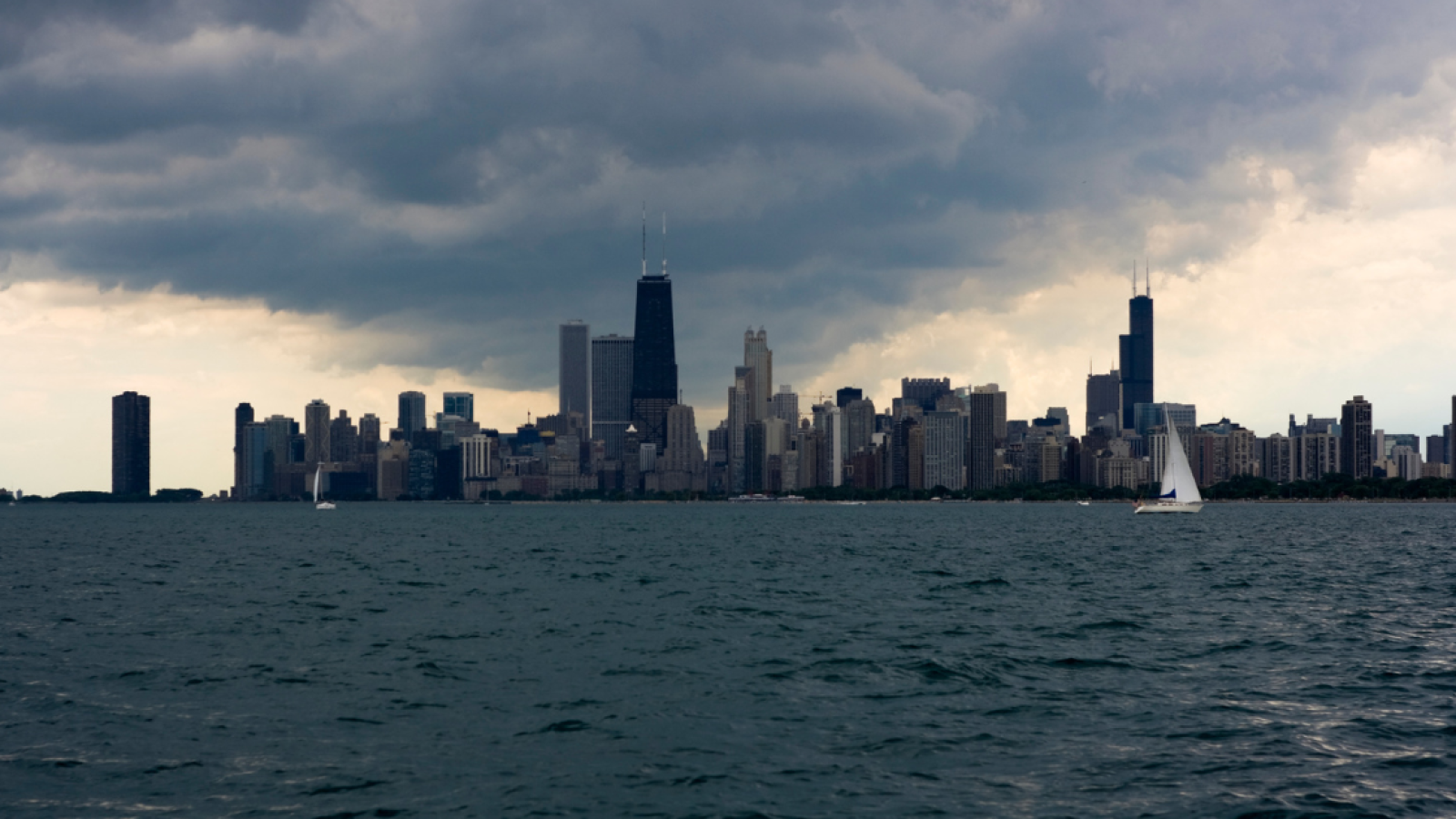
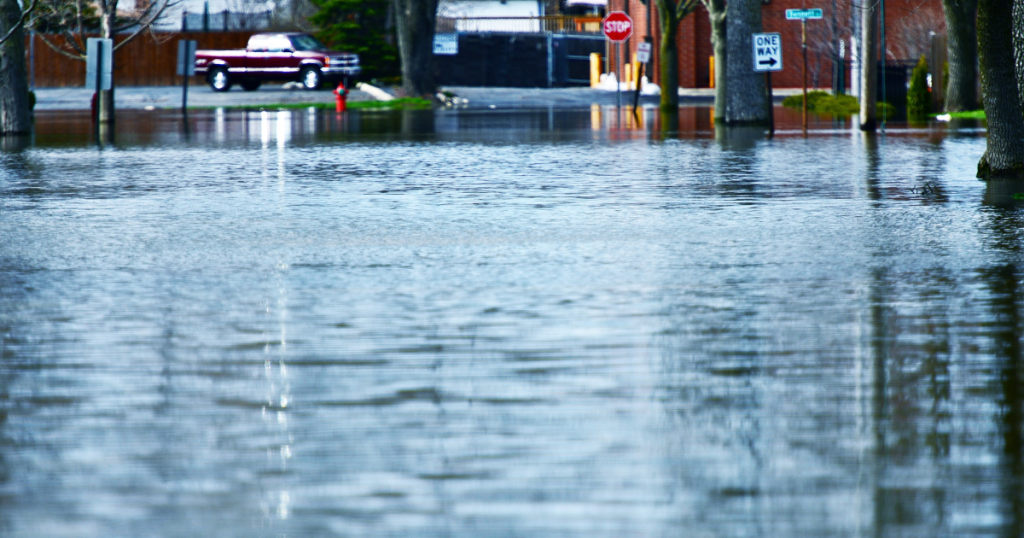
Like clockwork, each spring and summer, Chicagoans are met with intense storms. The sky turns a dark gray, thunder rolls across Lake Michigan, and within minutes rain is coming down in sheets. Across the city, streets flood, overwhelming infrastructure designed to move this water away from homes and businesses. Even worse, a murky pool starts to form around some communities’ floor drains, reeking of sewage and floodwater.
For some Chicago communities, this is more than an inconvenience; it is devastating. The Chicago Sun-Times reported that in the summer of 2023, the West and South Sides were hit with 8 to 9 inches of rain over a short period of time. At least 70,000 basements flooded and the damage forced hundreds of people to find shelter elsewhere. This record-breaking storm is an example of some of the worst urban flooding the city has ever faced.
Chicago’s flooding is the consequence of three things: our infrastructure, accelerating climate change, and systemic urban disinvestment.
How Chicago’s Geography and Aging Pipes Cause Flooding
Often, the amount of flooding a city experiences stems not only from the infrastructure, but also the natural geography of the area. For instance, Chicago is naturally low-lying. It was built on a historic wetland with dense clay soil that holds water like a bowl rather than letting it drain away quickly into the ground.
To drain this landscape, early planners built a Combined Sewer System (CSS). In this design, both stormwater from street grates and raw household sewage flow into the same underground pipes. Chicago’s local neighborhood sewer network consists of roughly 4,500 miles of aging pipes, many of which originate back to the 1930s. According to the Metropolitan Water Reclamation District (MWRD), these local neighborhood mains were engineered to only handle about 2 inches of rain over a full 24-hour period.
Under normal conditions, water flows smoothly to water reclamation plants. However, during periods of intense rainfall, the system fails to collect it all. This infrastructure issue, combined with our changing climate, leads to the excessive flooding Chicagoans experience.
The Reality of Accelerating Rainfall
Statewide annual precipitation in Illinois increased by nearly 6 inches between 1895 and 2019 (about 15%), far exceeding the national average. Our storms now routinely produce 2 inches of rain, or more, in a single hour. A report from the University of Illinois warns that what we consider “adequate” today won’t hold true in the future, as 24-hour rainfall totals could grow by another inch by 2050. Infrastructure standards of the past simply aren’t equipped to handle the intensity of storms today.
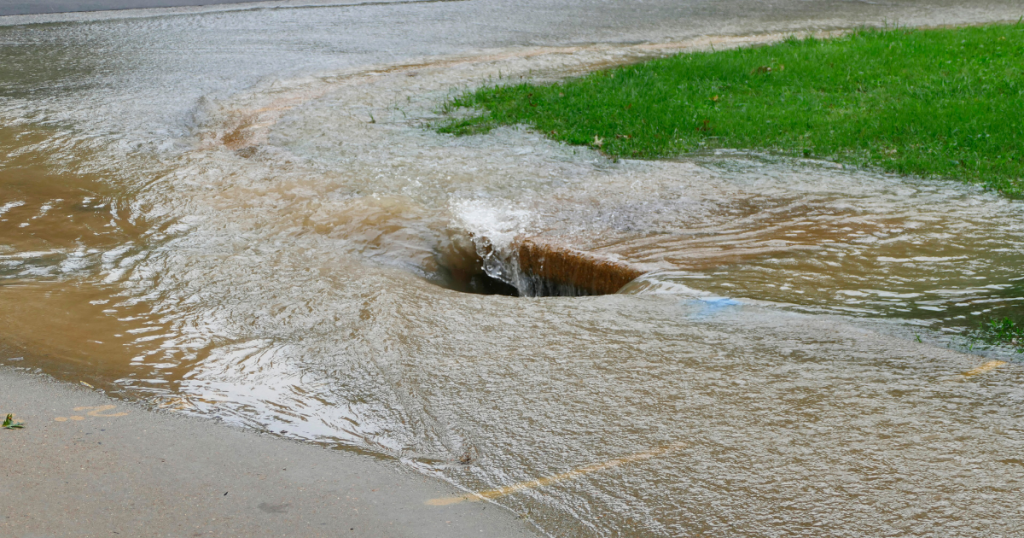
This reality is part of the reason why Cook County built the Tunnel and Reservoir Plan, commonly known as the Deep Tunnel, a massive civil engineering project designed to catch overflow. Yet, every summer, our basements and streets continue to suffer from urban flooding. The local neighborhood pipes fill to maximum capacity so quickly that the system is completely overwhelmed before the stormwater can even reach the city’s Deep Tunnel reservoirs. Our modern water infrastructure is bottlenecked by 1930s pipes. This forces murky sewer and stormwater backward into basements.
In fact, the limits of this system were put to a historic test in early July 2026. Following weeks of relentless downpours, the McCook reservoir fluctuated between 98% and 100% capacity, while the Thornton reservoir filled to a record-breaking 94%. This provided that even a system holding a combined 11 billion gallons of water cannot keep pace with our shifting climate.
The Environmental Inequity to Urban Flooding
Flooding does not affect all Chicagoans equally. It is an environmental justice crisis, with the most severe impacts heavily concentrated in working-class Black and Brown neighborhoods on the South and West sides, like Austin, Chatham, South Shore, and Auburn Gresham. Chatham was directly built on former marshland, and in the mid to late 1800s, was known as Mud Lake due to how swampy it was.
This crisis is directly tied to the built environment in these south and west neighborhoods. Due to decades of systemic disinvestment and discriminatory urban planning, these neighborhoods have less green space, lower tree canopy coverage, and significantly more impervious surfaces like concrete, asphalt, and industrial corridors. When rain hits these hard surfaces, it cannot absorb into the ground; it becomes immediate surface runoff, flowing straight to the nearest sewer grate.
The consequences of this environmental injustice are expensive on many levels. Over the last two decades, property damage in Chicago has skyrocketed into billions of dollars, draining wealth from families who lack specialized flood insurance or the financial cushion to repeatedly rebuild. Homes that also repeatedly experience flooding become breeding grounds for mold. This chronic dampness directly correlates with elevated rates of childhood asthma and respiratory illnesses, turning flooding into a serious public health problem.
The Policies Reshaping Our Water Infrastructure
Fixing a structural crisis of this scale requires moving away from reactive emergency cleanups and toward proactive water justice and climate policy. At IEC, we have been working alongside frontline environmental justice organizations to pass legislation that protects communities and secures real infrastructure funding.
In 2013, the General Assembly passed the Green Infrastructure for Clean Water Act, providing municipalities and counties with the authority and tools to expand green infrastructure. This framework sparked the Illinois Green Infrastructure Grant (IGIG) program, which has since awarded over $20 million for 40 local projects. These completed projects include the construction of permeable pavement parking lots and valleys, vegetated bioswales, riparian zones, and rain gardens. The completion of 15 projects alone have kept our waterways cleaner by preventing 223 tons of sediment load and 62,113 pounds of suspended solids from entering our water systems annually, while reducing nitrogen loads by 960 pounds and phosphorus by 276 pounds each year. Following this momentum, in 2014, Illinois adopted the Urban Flooding Awareness Act. This legislation established a multi-agency working group to evaluate the latest research, officially shifting the conversation by recognizing that urban flooding can happen anywhere, not just in traditional floodplains. By examining innovative stormwater solutions, this act gave communities the tools to protect homes and neighborhoods from sudden cloudbursts.
Environmental justice advocates achieved a massive milestone with the passage of SB3772, the Cumulative Impact Assessment Act in 2026. This historic policy requires state regulatory bodies to evaluate the cumulative impacts of existing pollution before issuing new air permits in environmental justice communities. While this is a monumental victory for air quality, it also highlights how much work remains to address water-related cumulative impacts. To truly protect frontline neighborhoods, Illinois must expand these cumulative impact frameworks to water pollution and infrastructure. This means leveraging state funding mechanisms, like the State Revolving Fund (SRF), the primary source for water infrastructure financing, to ensure environmental justice communities are prioritized, protected, and included in long-term water resilience planning.
Upgrading Gray and Green Infrastructure
We cannot build a climate-resilient Chicago without addressing both underground pipes and the surface landscape. For many frontline environmental justice communities, the immediate priority should be upgrading crumbling gray infrastructure. Often, green infrastructure is more visible in wealthier areas that already have access to resilient flood and sewage systems, allowing them to turn to nature-based solutions.
Once a community’s gray infrastructure is modernized, green infrastructure can follow. Relying only on burying wider pipes will eventually fail as climate change accelerates; investing in nature-based solutions that capture and absorb rainwater exactly where it falls can help keep new gray infrastructure from becoming overwhelmed.
By intentionally expanding green infrastructure alongside pipe upgrades, we take some pressure off our sewer network. Replacing traditional asphalt in alleys and parking lots with porous materials allows water to pass directly into the ground rather than rushing into a storm drain. Similarly, planting rain gardens with native plants helps break up our region’s dense clay soil. These native plants have deep, fibrous root systems that can stretch up to 15 feet underground, creating natural pathways for deep water absorption.
Prioritizing tree canopy on the South and West sides is another way to layer green protection over gray. A mature tree acts like a natural sponge, taking up thousands of gallons of stormwater annually through its roots and canopy, and slowing down the rate at which water rushes toward street grates. By treating gray and green infrastructure not as an either-or-choice, but as sequential, overlapping steps, we can protect homes from immediate sewer backups while building long-term climate resilience.
Reclaiming the Wetland
When your street floods, it is a visible reminder that urban flooding is a structural and societal issue. Our current, dated infrastructure cannot handle today’s climate realities. By combining policy advocacy with updates to gray and green infrastructure that respects the wetland Chicago once was, we can protect our homes and communities and build a more equitable, climate-resilient city.
About the Author
Kate is IEC’s Communications and Campaigns Fellow, creating content to inspire Illinois’ environmental community to take action. Her past work highlights sustainability, environmental policy, and environmental justice. She is passionate about inclusive scientific communication and strives to turn complex issues into actionable advocacy.
Read more by Kate: