Cate Caldwell and Aaron Wang
Senior Policy Manager and Legislative Associate
Last year, the Trump administration dismantled the Inflation Reduction Act (IRA), the United States’ first major climate law, with the passage of H.R.1, which they called a “Big Beautiful Bill.” Our team at the Illinois Environmental Council expressed the concerns of Illinois’ environmental community on this “Big Ugly Bill” in a blog post widely referenced by partners and press alike. At the time, many of those concerns were based on economic modeling and policy analysis. Today, while some provisions of the law will take years to fully unfold, the negative impacts are already beginning to emerge.
Over the past year, we’ve heard from clean energy businesses navigating uncertainty, conservation organizations preparing for fewer federal resources, environmental justice advocates scrambling to replace lost funding, and food and agriculture partners concerned about what these policy changes mean for the future of Illinois.
The decisions made in Washington don’t stay in Washington; they’re affecting communities across our state. Last year, we outlined what Illinois stood to lose. One year later, we’re taking a look at what we’re seeing now.
Clean Energy Investment: Uncertainty Is Slowing Progress
Then: When Congress passed H.R.1, IEC warned that rolling back federal clean energy tax incentives would threaten Illinois’ momentum as a national clean energy leader.
Our analysis projected Illinois could lose:
- Up to 52,000 manufacturing and clean energy jobs
- Billions in private investment
- Critical progress toward achieving the goals of the Climate and Equitable Jobs Act (CEJA)
- More than 26,000 fewer jobs by 2030
- Nearly $45 billion less economic activity over the next decade
- Slower deployment of renewable energy projects
- Greater uncertainty for businesses deciding where to invest and expand
One Year Later: Updated economic modeling continues to point to significant long-term consequences if current federal policy remains in place — and some of those consequences are no longer projections. Nationally, clean energy project cancellations in 2025 outpaced new announcements for the first time. That volatility has continued into 2026, with project cancellations nearly offsetting new job announcements.
Residential projects only remain eligible for federal tax credits if construction was completed by December 31, 2025. Commercial projects face new eligibility requirements starting in 2026, with all credits expiring after 2027. These credits had covered at least 6% of project costs (30% or more with prevailing wage compliance, and up to 70% for projects serving low-income communities or public housing), making them a meaningful lever for affordability.
Illinois’ own incentive programs — Illinois Shines and Illinois Solar for All — are state-funded and remain available independent of federal policy. Illinois continues to lead because of strong state policies, but businesses are increasingly forced to make investment decisions amid shifting federal incentives and compressed development timelines.
What We’re Hearing: The impacts are already becoming visible in Illinois’ transportation sector.
Brian Urbaszewski of the Respiratory Health Association noted that the expiration of federal electric vehicle (EV) tax credits led to an immediate slowdown in EV adoption even with Illinois’ own rebate program still in place. The federal New Clean Vehicle Credit — worth up to $7,500 — and the used-EV credit both expired on September 30, 2025, under H.R.1, ending incentives that had been scheduled to run through 2032.
In the six months leading up to the elimination of the federal tax credits (May–October 2025), Illinois added 17,407 new electric vehicles to its roads. During the six months after the credits ended (November 2025–April 2026), that number dropped to just 7,064. That decline suggests that state incentives alone can’t replace the purchasing power of federal investments. Illinois’ own rebate program — up to $4,000 per vehicle — is capped by an annual legislative appropriation of roughly $14 million and limited by income and vehicle-price eligibility rules, meaning only a fraction of buyers who lost the federal credit can access a state replacement.
The pattern isn’t unique to Illinois: Energy Information Administration data shows battery-electric vehicles reached a record 12% of light-duty vehicle sales in September 2025, just before the credit expired, then fell to under 6% in every subsequent month of the year. Cox Automotive later found that new battery electric vehicle registrations nationally were down 28% year-over-year in the first quarter of 2026.
At the same time, Illinois continues to demonstrate what’s possible through state business leadership. Rivian continues expanding manufacturing in Normal, recently introduced a more affordable electric vehicle model, and is increasing production capacity. Once fully ramped, the Normal facility is expected to produce as many as 215,000 vehicles a year. Gotion, a battery maker, is investing in battery manufacturing that will supply the new Slate electric pickup, creating jobs while strengthening Illinois’ clean manufacturing economy.
The lesson is clear: Illinois is still moving forward, but federal policy is making that work harder. When state and federal policy instead complement one another, working in tandem to propel us forward, Illinoisans win.
Higher Energy Costs for Illinois Families
Then: IEC warned that eliminating federal clean energy incentives would ultimately increase energy costs for households and businesses. A year ago, it was expected that:
- The average Illinois household could pay more than $190 additional per year by 2030
- Annual household costs could exceed $400 more per year by 2035
- Illinois families could collectively pay roughly $12 billion in additional energy costs over the next decade
One Year Later: As electricity demand grows, slowing the deployment of lower-cost renewable energy risks placing additional upward pressure on utility bills at a time when many Illinois families are already struggling with affordability.
In Illinois, average ComEd residential bills have already risen 12% in 2026, with Ameren customers facing an even steeper roughly 29% increase —driven primarily by rising capacity costs as electricity demand grows from data centers. Lower-cost renewables could have helped soften that pressure, had federal incentives remained in place to accelerate their deployment. Meanwhile, the federal tax credits that once helped families invest in their own energy bill savings — like rooftop solar and home efficiency upgrades — ended for good after December 31, 2025, with no replacement currently scheduled.
Illinois has moved to respond at the state level through the Clean and Reliable Grid Affordability Act (CRGA), but state action alone cannot fully offset the loss of federal support.
Environmental Justice: Communities Are Losing Critical Support
Then: IEC warned that H.R.1 would eliminate or reduce investments supporting environmental justice communities, pollution reduction, and climate resilience.
One Year Later: Many of those funding opportunities have already disappeared or been thrown into limbo.
H.R.1 formally rescinded all unobligated funding under the IRA’s $2.8 billion Environmental and Climate Justice Block Grant Program, along with the Neighborhood Access and Equity Grants program that had funded projects reconnecting communities divided by highways and hazardous infrastructure. That means any Illinois project still waiting in the pipeline — not yet formally awarded when the bill passed — is now ineligible.
Separately, organizations whose already-awarded grants were terminated by EPA in May 2025 have been fighting that cancellation in court. One of the terminated grants was $2.7 million meant to address sewage backups along the Chicago-Calumet River system. A federal judge ruled in June 2026 that EPA’s cancellation of the block grant program was unlawful, and issued a follow-up order in July demanding EPA administer the block grant program, with funds required to be made available through September 30. It remains to be seen whether, or how quickly, the agency complies, given that it has already dismissed the staff who ran the program. Organizations that relied on federal grants are delaying projects, scaling back programming, or searching for replacement funding to continue serving their communities.
The loss of these investments doesn’t just affect nonprofit budgets but rather delays cleaner air, safer drinking water, and healthier neighborhoods for communities that have historically borne the greatest environmental burdens.
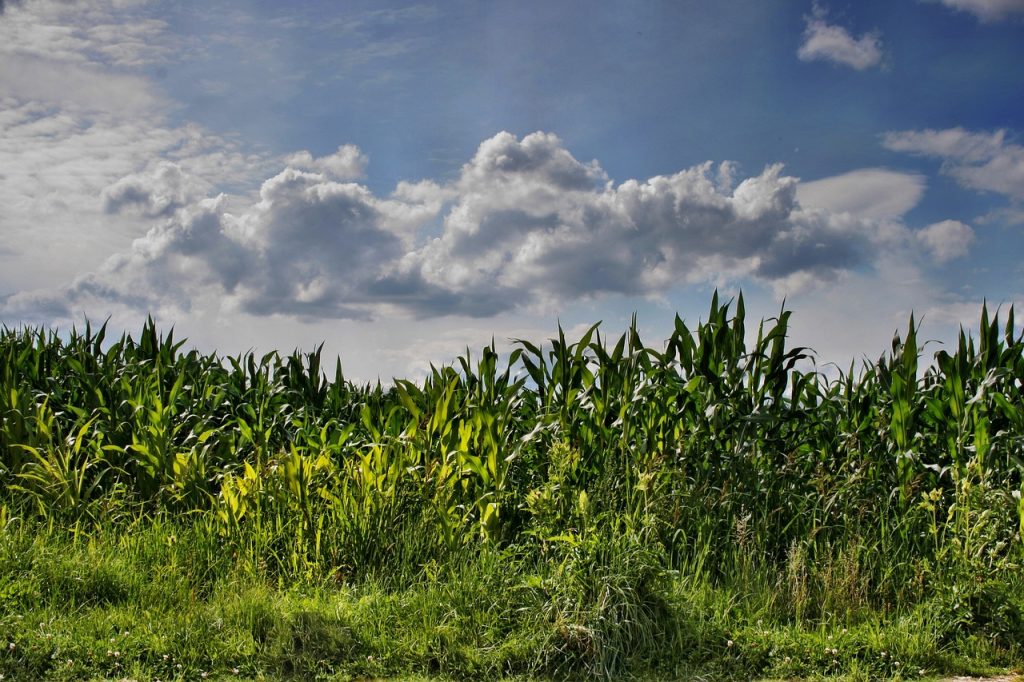
The Future of Illinois Agriculture: Rural Communities and Food Insecurity
According to Liz Stelk of the Illinois Stewardship Alliance, one of the most significant and least discussed consequences of H.R.1 is how it fundamentally changed the relationship between agriculture, nutrition, and conservation policy.
For decades, the federal Farm Bill brought together food assistance, conservation programs, and agricultural policy under one legislative framework. H.R.1’s deep cuts to the Supplemental Nutrition Assistance Program (SNAP) effectively separated nutrition policy from future Farm Bill negotiations.
That shift has implications far beyond food assistance.
Without nutrition and conservation at the table together, future federal farm policy risks focusing almost exclusively on maximizing production, exports, commodity prices, and risk management while giving far less attention to Illinois communities’ priorities like hunger, land stewardship, water quality, and environmental outcomes.
As Liz Stelk explained, “For nearly 50 years, the Farm Bill forced Congress to address agriculture and food together as if food and agriculture are actually connected. Without that framework, we risk losing the balance between production, conservation, and nutrition that has shaped federal policy for generations.”
For Illinois, a state where agriculture, conservation, and healthy communities are deeply interconnected, that shift could have lasting consequences.
The consequences of H.R.1 are not limited to farms. Communities across Illinois are continuing to monitor how changes to SNAP and related programs affect food access, farmers markets, and local economies. Cuts to nutrition assistance ripple outward, affecting families, local grocery stores, farmers who accept SNAP benefits, and rural communities where food access is already limited.
Then: In our original analysis, IEC warned that changes to SNAP would make it harder for Illinois families to put food on the table while creating new challenges for local food systems.
One Year Later: Those concerns are beginning to play out across Illinois.
According to reports from the Illinois Department of Human Services, an estimated 360,000 Illinoisans are expected to lose SNAP benefits because of H.R.1’s expanded restrictions on eligibility. Beginning this fall, Illinois will also shoulder an estimated $80 million annually in additional administrative costs while losing federal support for SNAP-Ed, the nutrition education program that connected families to healthy, local food.
The consequences extend far beyond individual households.
Programs like Link Match, which doubles the purchasing power of SNAP dollars at farmers markets, food co-ops, farm stands, and local grocery stores, have become an important source of income for Illinois farmers. Link Match spending has grown dramatically from $469,000 in 2021 to more than $2.26 million in 2025, helping connect families with fresh, locally grown food while supporting small agricultural businesses across the state.
As fewer Illinoisans qualify for SNAP, those dollars disappear from local economies.
For many small farmers, particularly those selling directly to consumers, that loss is significant. Some vendors report that SNAP and Link Match purchases account for a substantial share of their annual sales, helping sustain operations that already operate on thin margins. As one Illinois food systems advocate noted, what may appear to be a modest amount of revenue in state budget terms can determine whether a small farm remains viable.

Illinois Is Still Leading…But We Can't Do It Alone
Despite federal rollbacks, Illinois continues to invest in clean energy, sustainable agriculture, conservation, transportation, and environmental justice.
Those investments are making a difference.
But state leadership can’t fully replace the scale of federal partnership needed to modernize our multi-state electric grid, protect clean drinking water, conserve working lands, support family farms, reduce pollution, and keep energy affordable.
One year after H.R.1 became law, many of the risks identified in IEC’s original analysis are beginning to materialize. The choices Congress makes next will determine how quickly Illinois can build a cleaner, healthier, and more prosperous future.
Looking Ahead
IEC will continue working alongside our partners, communities, businesses, farmers, and both local and state governments to:
- Protect federal investments in clean energy and manufacturing
- Defend programs that keep our air, water, and communities healthy
- Support Illinois workers, farmers, and local economies
- Ensure every Illinoisan has access to affordable, reliable, clean energy and healthy food systems
The consequences of federal policy don’t stop at the U.S. Capitol…they’re felt in our neighborhoods, on our farms, in our businesses, and at kitchen tables across Illinois.
About the Authors
Cate Caldwell joined the Illinois Environmental Council as a Senior Policy Manager in March of 2025. Cate’s leadership ensures that Illinois’ environmental goals are harmonized with national policies, working closely with both the State Legislature and Congressional Delegation of Illinois.
Xuandi (Aaron) Wang joined the Illinois Environmental Council as a Legislative Associate in January 2026. Aaron helps advance a broad portfolio of energy policy initiatives through legislative tracking, research and drafting, and coalition building.
Read more by Cate: