
Olivia Kiefer and Keegan Sullivan
Government Affairs Intern and Energy Campaigns Associate
This July marked 31 years since Chicago’s deadliest ever heat event, when more than 700 Chicagoans died from heat-exacerbated symptoms in less than a week. The heat wave was a shock to the city and spurred major reforms in our heat preparedness. Today, heat waves are becoming more frequent and more severe. At the same time, the energy we need to keep cool is getting more expensive. This isn’t just a problem for Chicago. Constantly rising costs force Illinoisans around the state to choose between cooling their homes and making other essential purchases, such as food, medicine, or transportation. For our most vulnerable and most polluted populations, access to affordable energy during heat waves is life or death.
What do we mean by Heat Deaths?
Heat waves are not just uncomfortable; they exacerbate health inequities and can cause premature deaths – a phenomenon defined as a “heat death”. Heat waves have significant health consequences, exacerbating existing health conditions, increasing disease transmission, and causing heat stroke. This year’s extraordinary heat made July 2026 Cook County’s deadliest month for heat deaths in a decade. Regardless of where you live, heat waves have become the most lethal weather phenomenon in the world, killing an average of 12,000 people every year. As climate change intensifies, the number of annual heat waves in the US has doubled since 1980, and Illinois is no stranger to heat. Heat waves in Chicago are well publicized, but the whole state is vulnerable to intense heat and humidity, while all Illinoisans are dealing with rising utility bills. But heat deaths are not distributed equally. Low-income communities, unhoused and elderly people, and those who are of compromised health are at a higher risk of heat death. While it’s been reported that ten Chicagoans died in the recent heat, the true number could be substantially higher. Experts warn that reported heat death numbers are often inaccurate, with other conditions blamed when heat is the culprit.
Heat Waves in Chicago
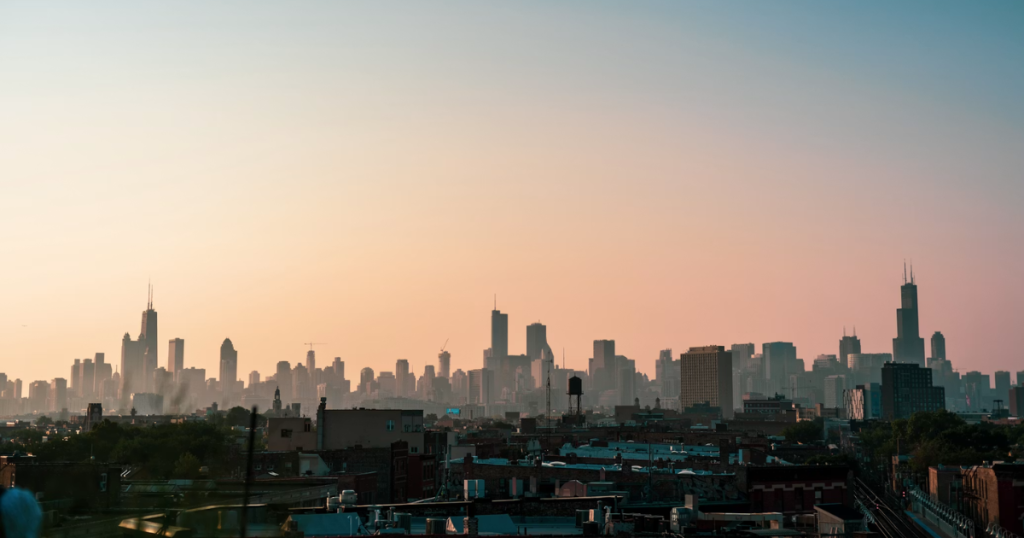
In 1995, Chicago lacked a heat emergency plan. Following the disaster, city officials vowed to prevent another heat-related crisis from occurring and created the emergency heat response system. Since then, the city has built more cooling centers to provide relief for those who cannot find it at home, planted thousands of trees, and installed reflective roofs. In 2025, Mayor Brandon Johnson announced the development of a Heat Vulnerability Index, which will collect health outcome data from hospitals to map vulnerability levels across the city. Alderwoman Maria Hadden also introduced an ordinance to protect workers from heat illness, establishing procedures for extreme heat days. Despite these measures, when extreme heat hits Chicago, our most vulnerable communities continue to suffer and need twin protections against both heat and high energy costs.
Climate Change and Energy Costs
Something else that has changed since 1995? Energy prices. Summer 2026 is set to be one of the hottest summers on record, and Illinoisans’ energy bills have risen by as much as 50%, compared to Summer 2024. If that weren’t enough, Illinois’ utilities are asking for a combined $880 million in rate hikes. At the same time, the Trump administration has slashed support for clean energy and energy efficiency programs. As more families struggle to pay their bills and cool their homes, federal utility relief programs like the Low Income Home Energy Assistance Program (LIHEAP) can now only provide aid to 1 in 6 families who need support. Rather than strengthening this program in response, the federal government is working to cut it altogether, leaving vulnerable families to choose between cooling their home and putting food on the table.
What’s more, while we struggle to pay our electric bill each month, data centers get preferential treatment while driving up our costs. Each hyperscale center can use enough energy to power hundreds of thousands of homes, straining an already overwhelmed system. Around the country, blackouts have become more frequent, leaving people without air conditioning on the hottest days of summer.
All of these factors compound on environmental justice communities. Energy unreliability disproportionately impacts low-income and Black and Brown communities. People in low-income communities often live in older, less energy-efficient homes with poor insulation. More heat is trapped within their homes to begin with, and they require more energy to cool down. As a result, they live with higher indoor temperatures and are less likely to be able to afford utility bills. Additionally, low-income and Black and Brown communities systematically have less green space and shade cover, denying them a natural, environmentally friendly, and affordable cooling alternative that mostly white, higher-income communities have.

Protecting Illinois Consumers, Protecting Illinois Communities
As the climate changes, affordable clean energy is crucial to the health and well-being of vulnerable communities. A suite of resources and policies can help protect communities across Illinois during intense heat. For all of Illinois, consumer protections must be allied with intentional heat planning, to mitigate heat-wave disasters.
- Fund clean, energy-efficient, modern homes: Energy-efficient, weatherized, electric homes save money while keeping homes cooler. Housing stock across Illinois must be modernized to withstand intense heat and lower utility bills. Homes in Illinois must be able to withstand intense heat, freezing cold, and everything in between while providing energy savings to their occupants. Programs like Chicago’s Green Homes service are a strong start, but more needs to be done to retrofit buildings in the state.
- Reject needless utility rate hikes: This year Illinois’ utilities are shamelessly requesting $880 million dollars in combined rate hikes. This comes as ComEd and Ameren set new record prices for electricity every summer. Between high electricity costs and constant gas rate hikes Illinoisans are being crushed on all sides by high costs and cannot shoulder continuous rate hikes – especially when summer cooling is a safety need.
- Invest in green spaces for everyone: Green spaces, and particularly shade-producing trees, are invaluable for cities during heat waves. Our green spaces are unevenly distributed, due to decades of racist practices like neighborhood redlining, and underdevelopment. Investing in urban green spaces for Illinois’ cities can help soften the effects of extreme heat.
About the Author
Olivia Kiefer is IEC’s City Government Affairs Intern, supporting IEC’s Chicago-focused initiatives. She is studying environmental policy and political science at Loyola University Chicago and engages in international action research regarding water access, sustainability, and social justice through the Gannon Center for Women and Leadership. She believes local politics are an important tool in promoting environmental justice.
Keegan Sullivan is IEC’s Energy Campaigns Associate, supporting the Energy and Communications teams. Keegan works with IEC’s legislative, programs, and communications experts to deliver thoughtful campaigns advancing dignified solutions to decarbonize the built environment. Keegan firmly believes a just and equitable energy transition will be a powerful force for social change.