Francisco Lopez Zavala
Climate Program Policy Associate
Five years ago today, Governor JB Pritzker signed the Climate and Equitable Jobs Act (CEJA) into law, marking one of the nation’s most groundbreaking advancements in climate justice and equitable workforce transition. CEJA does a lot of cool things – it puts Illinois on a path to 100% renewable energy by 2050, sets deadlines to close polluting coal and gas plants by 2045, and expands energy efficiency programs to help save Illinoisans money on their energy bills. One of the coolest aspects of CEJA? It prioritizes a just transition and ensures we’re lifting up workers in our efforts to achieve our climate goals. The future we want to build will require and create millions of jobs. CEJA ensures that former fossil fuel workers and Illinoisans from low-income, environmental justice, and historically underserved communities are trained for those jobs.
Over the past five years, IEC has organized tours of five of the Workforce Hubs made possible by CEJA to show legislators, local leaders, and advocates how CEJA’s training programs are equipping the next generation of clean energy workers in Illinois. Come along with us on a ~tour by blog~ to see what makes the Workforce Hubs so cool.
What is a CEJA workforce hub?
The CEJA Clean Jobs Workforce Network program, otherwise known as the “Workforce Hubs,” is part of a broader CEJA ecosystem administered by the Illinois Department of Commerce and Economic Opportunity (DCEO) that includes programs for workforce development, business services, and clean energy project funding. The Workforce Hubs are located in 14 communities across Illinois, including: Rockford, Waukegan, Chicago South, Chicago West/Southwest, Kankakee, Aurora, Joliet, Peoria, Champaign, Danville, Decatur, Alton, East St. Louis, and Carbondale. Each hub serves as a regional training center, providing free education and job placement for careers in the clean energy industry.
Each hub is unique because every community across Illinois is unique. IEC set out to show people firsthand what makes each hub special and what this nation-leading policy looks like in practice.
First Stop: Decatur
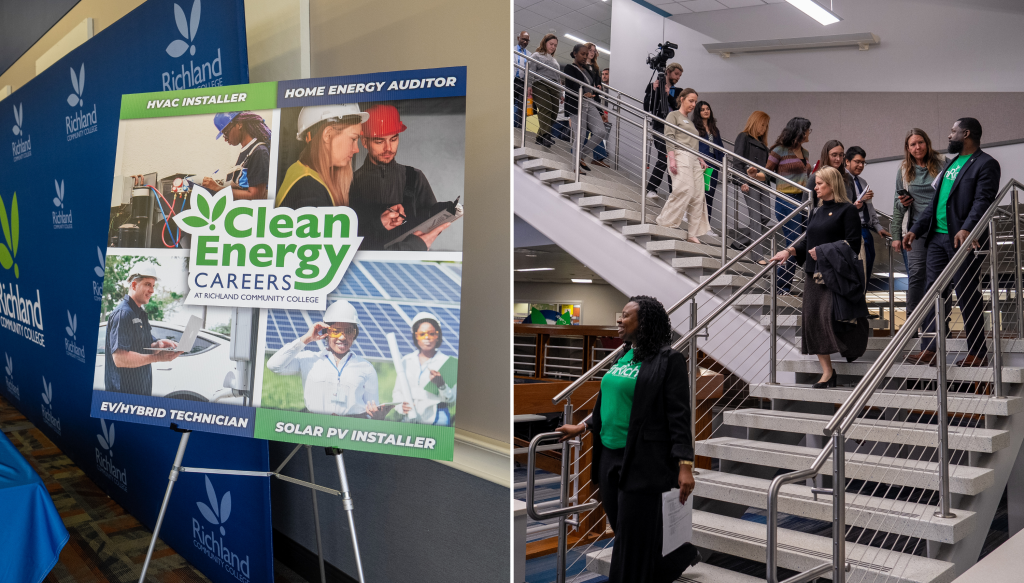
Dubbed the “Soybean Capital of the World,” Decatur, Illinois has a long history as an industrial and agricultural epicenter, but has been losing factory jobs for years. The CEJA workforce hub in Decatur, which is housed at Richland Community College (RCC), aims to integrate Illinois’ clean energy future with pre-existing local industries to help revitalize the community. RCC partners with local industries such as TCCI Manufacturing, Rivian, and Ameren Illinois to align job training at the workforce hub with local industry needs. The program, which has seen 100% enrollment across training programs, provides training and certification for entry-level positions in solar, HVAC, energy efficiency, and electric vehicle maintenance.
Decatur also exemplifies the type of community that CEJA is designed to benefit–it is recognized as both an Environmental Justice (EJ) and Restore, Reinvest, Renew (R3) community. RCC takes great care to ensure all students are set up for success by requiring students to complete the hub’s EnRich Essential Skills program, which teaches life skills and job readiness from a trauma-informed lens. During our tour in March of 2025, we heard from students and local employers alike that the CEJA program is giving new life to Decatur.
Second Stop: Alton
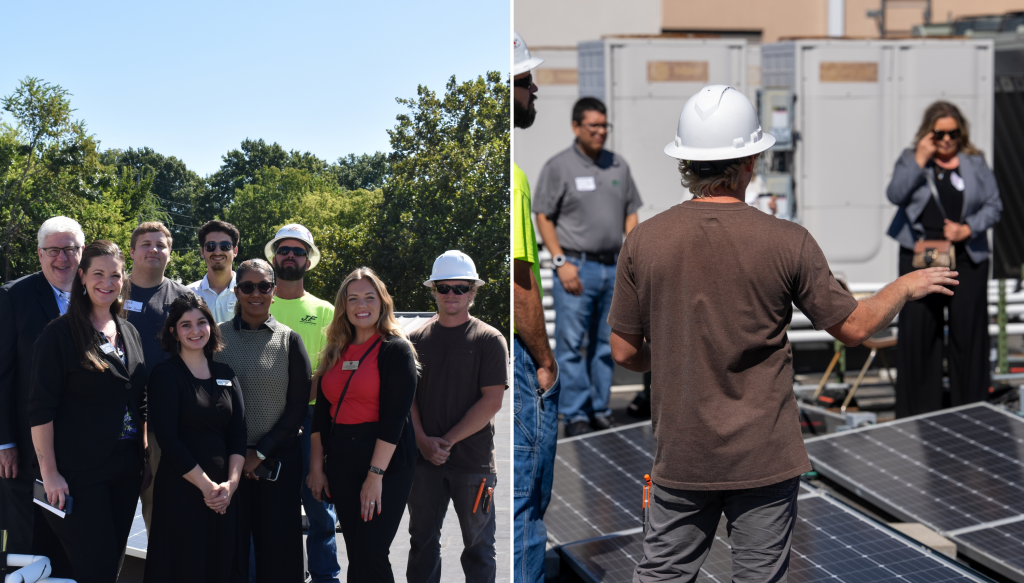
In August of 2025, IEC organized a tour of the Alton CEJA hub and had the opportunity to showcase a full-circle moment made possible by Illinois’ clean energy policies. Austin Frank started his career as a general contractor and then got his solar license through Lewis & Clark’s Future Energy Jobs Act (FEJA) training. Seeing the signs of a growing solar industry thanks to FEJA, he started his own solar company, ARF Solar, Inc. He returned to the training facilities at the Scott Bibb Center of Lewis and Clark Community College with IEC to tour the CEJA hub. An extra special stop on the tour? The rooftop of the Scott Bibb Center, where ARF Solar, Inc. was actively installing new solar panels funded completely by the Illinois Solar For All program (ILSFA).
Students at the Alton CEJA hub at Lewis & Clark Community College can learn the skills necessary to launch their own career in solar or other clean energy industries. ARF Solar is one of many employers that hires directly from the Alton CEJA Hub. Thanks to this hub and other CEJA programs, the Metro East’s future is bright.
Third Stop: Waukegan
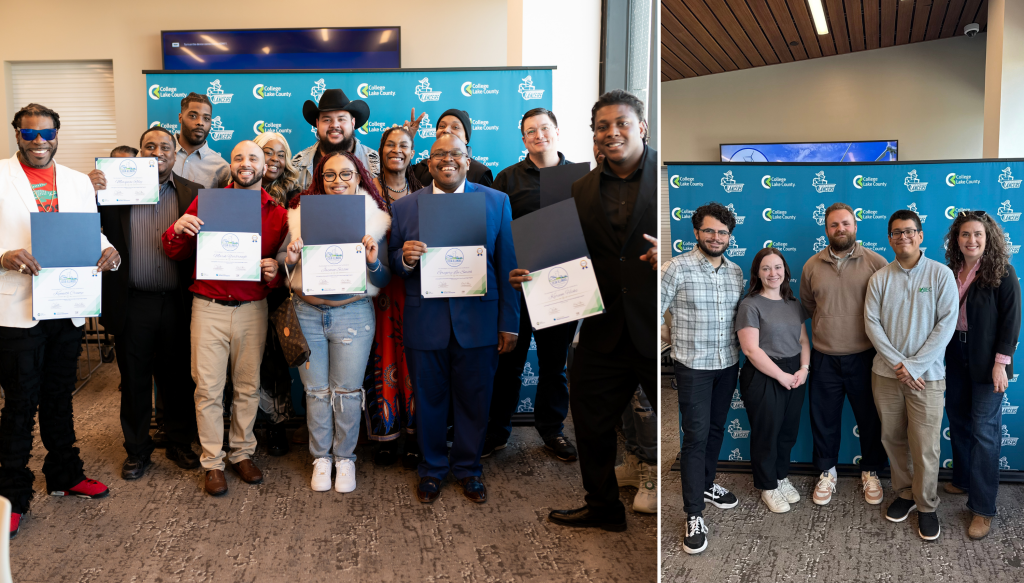
In February of 2026, organized in partnership with the College of Lake County (CLC), IEC headed north to tour Waukegan’s CEJA hub. Waukegan is unfortunately no stranger to the impacts of climate change and pollution – it’s home to the Waukegan coal plant and five Superfund sites that have been polluting Lake Michigan and the surrounding community for decades. Thanks to CEJA (and local advocates like Clean Power Lake County!), this former coal community is on a new path – the Workforce Hub is training students in solar construction, HVAC, weatherization, and electric vehicle maintenance. IEC and CLC organized the tour to take place on the same day as the graduation ceremony for CLC’s 13th and 14th CEJA cohorts. Read more about the inspiring graduation ceremony in the Chicago Tribune.
Fourth Stop: Rockford
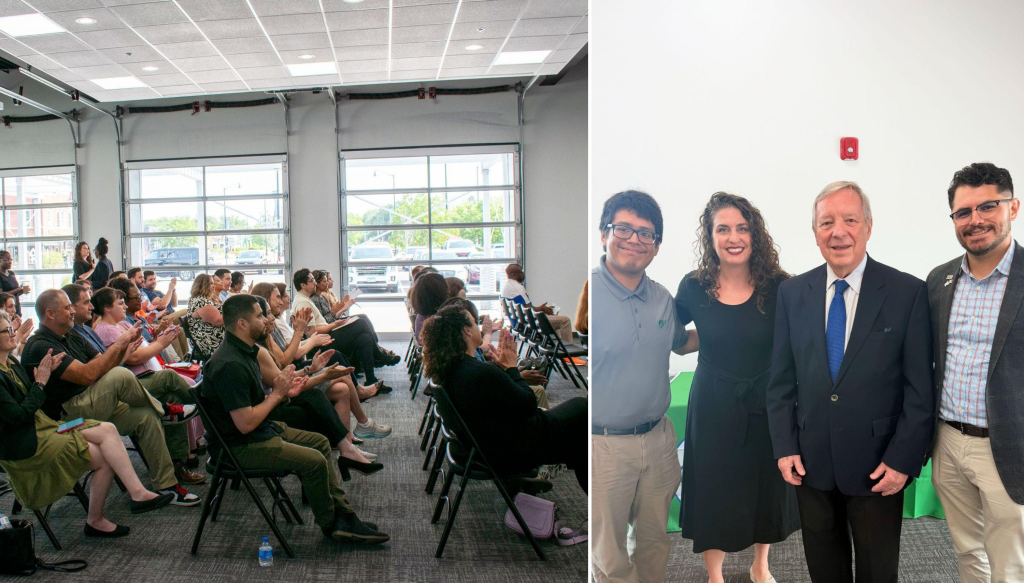
Next up on our CEJA tour – Rockford! The Rockford-area CEJA workforce hub is home to four total CEJA grants: an Energy Transition Navigator, which recruits students to participate in the CEJA program; a Workforce Hub, which trains students for entry-level jobs in clean energy industries; a Climate Works Pre-Apprenticeship Program, which provides pre-apprenticeship training in clean energy trades; and a Contractor Incubator, which supports contractors who want to expand into the clean energy sector. During the tour, co-organized by IEC, DCEO, and the Region 1 Planning Council, we met Julian Holt, who has benefited from each of these programs within the broader Rockford CEJA ecosystem. He was recruited to receive training in solar panel installation at the local hub through Zion West Enterprise, one of the local organizations operating the Workforce Hub alongside The Workforce Connection, Awaken Foundation, and Rock Valley College. He’s now Chief Operating Officer for Zenith Eco Engineering Solar Division and is part of the CEJA Contractor Incubator program. He’s also a Lead Instructor for solar panel installation trainees at Zion West, bringing the program full circle.
Fifth Stop: Chicago South
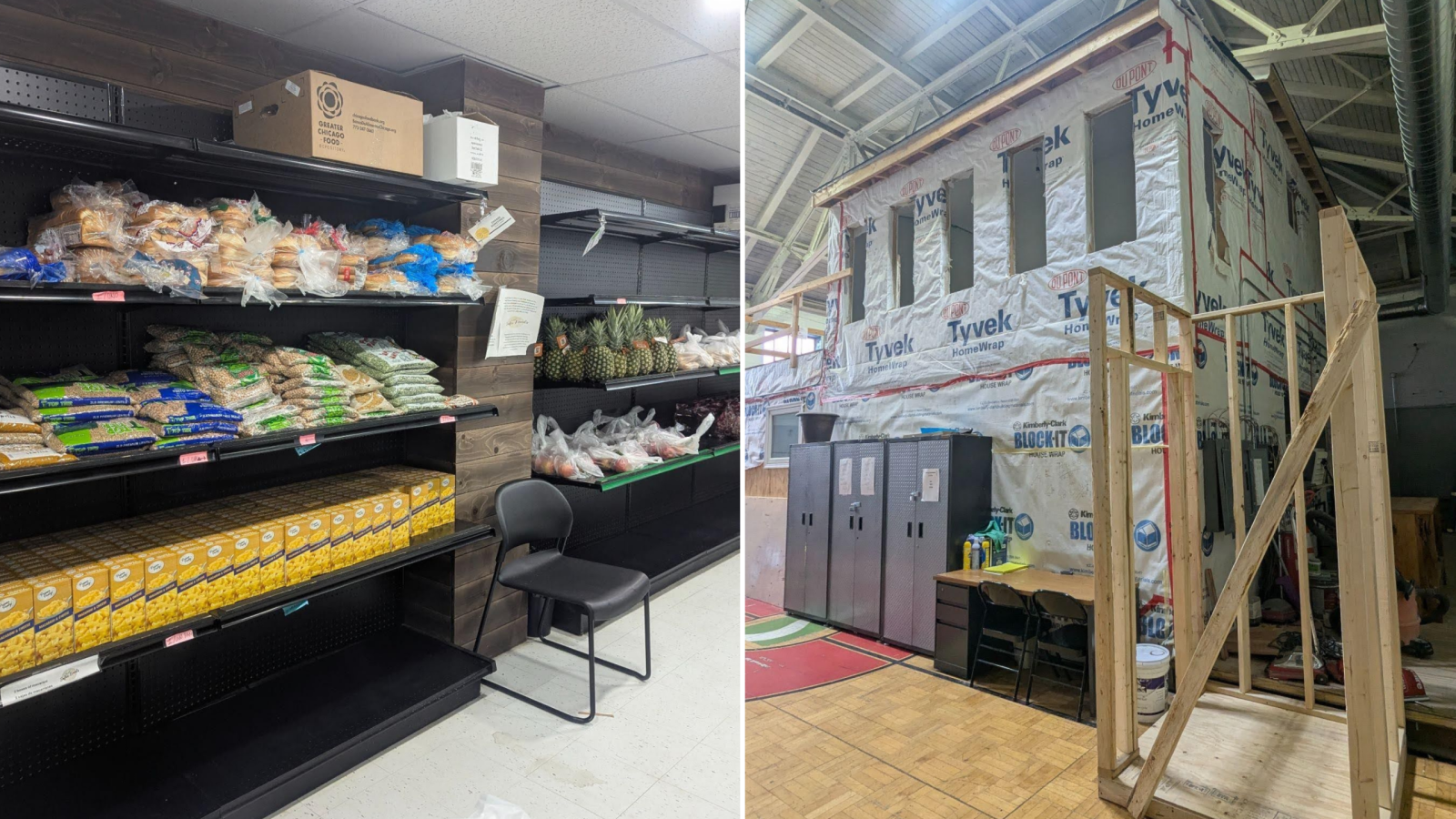
Most recently, IEC worked with The Safer Foundation to host a tour of the Chicago South CEJA hub during the 2026 Chicago Climate Week. The Safer Foundation has been supporting Chicago’s clean energy transformation since 2016, when it received Solar Training Pipeline funding through the Future Energy Jobs Act. The Chicago South hub calls the Safer Foundation’s Second Chance Center home, and over the years (with additional funding and support from CEJA!) the facility has grown to host key services that make the hub unique. The center includes a model house known as the ‘Playhouse’, where CEJA students can hone their construction skills and gain firsthand experience installing a residential rooftop solar system. The center also hosts a community food pantry–an example of one of the many non-academic wraparound support services offered by CEJA to ensure training participants can overcome barriers, finish their training, and secure good-paying jobs in the clean energy industry.
Where are we going next?
We have nine more workforce hubs across the state to explore, and we plan to organize tours of all of them. CEJA brings real benefits and life-changing opportunities to Illinoisans statewide, and the success of each hub is critical to achieving Illinois’ climate goals and building a sustainable future that our communities deserve. IEC is excited to hear more CEJA success stories as we traverse the state and can’t wait to see what the next five years will bring.
Want to learn more about CEJA?
If you’re interested in a career in clean energy and want to sign up for a CEJA training program, connect with the Energy Transition Navigator in your area to learn more. If you are a current clean energy employer or a business interested in expanding your operations into clean energy, check out these resources. If you’re interested in receiving updates about CEJA’s program implementation, sign up for the DCEO’s mailing list. To get updates on the equity initiatives in CEJA, check out the Illinois Power Agency’s newly launched Equity Data Dashboard.
The DCEO is also opening its grant application process for up to 16 grants for the Clean Jobs Workforce Network program (Workforce Hubs), 16 grants for the Energy Transition Navigator program, and three grants for the Climate Works Pre-Apprenticeship program for 2027-2029. To learn more about the application process, go to the DCEO’s CEJA Updates & Program Status webpage.