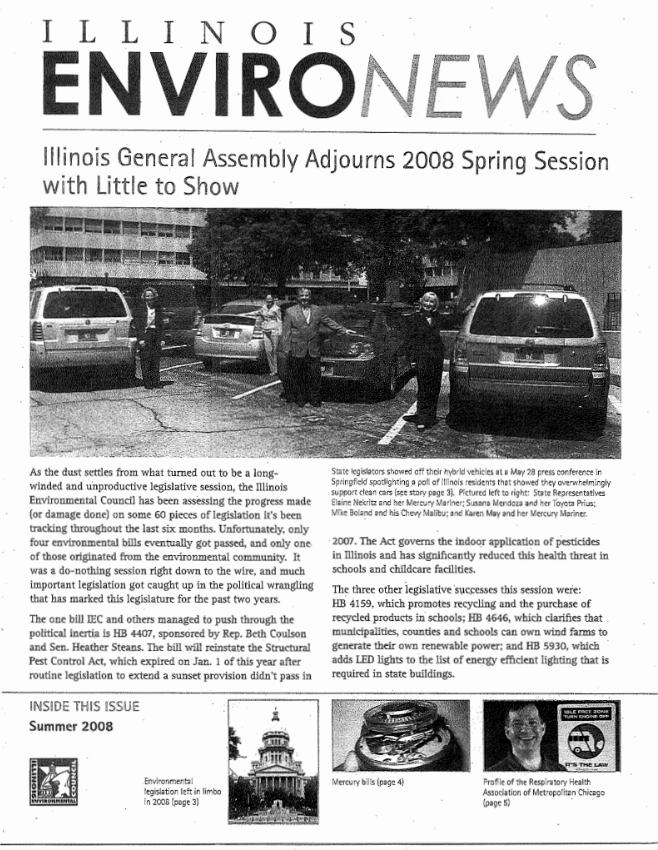
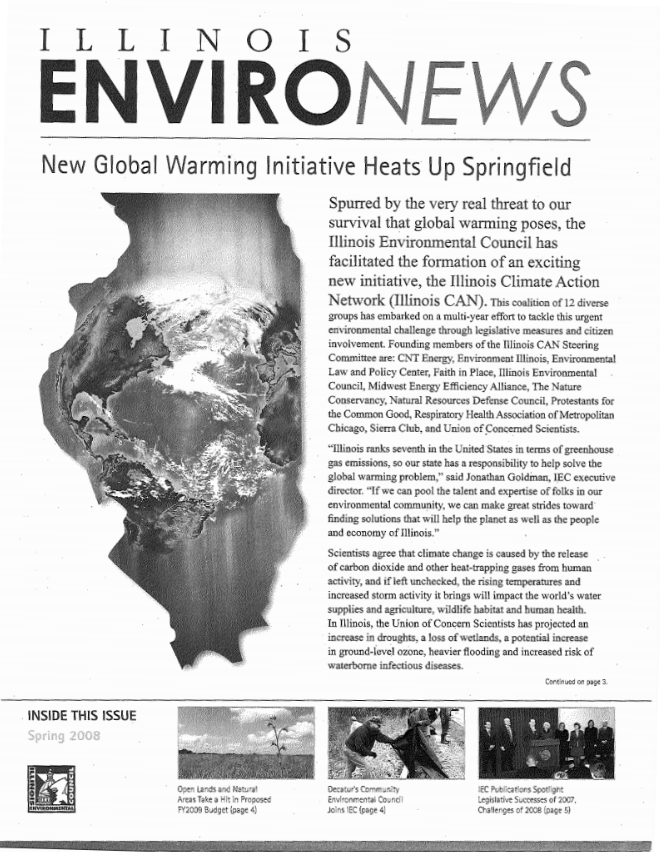
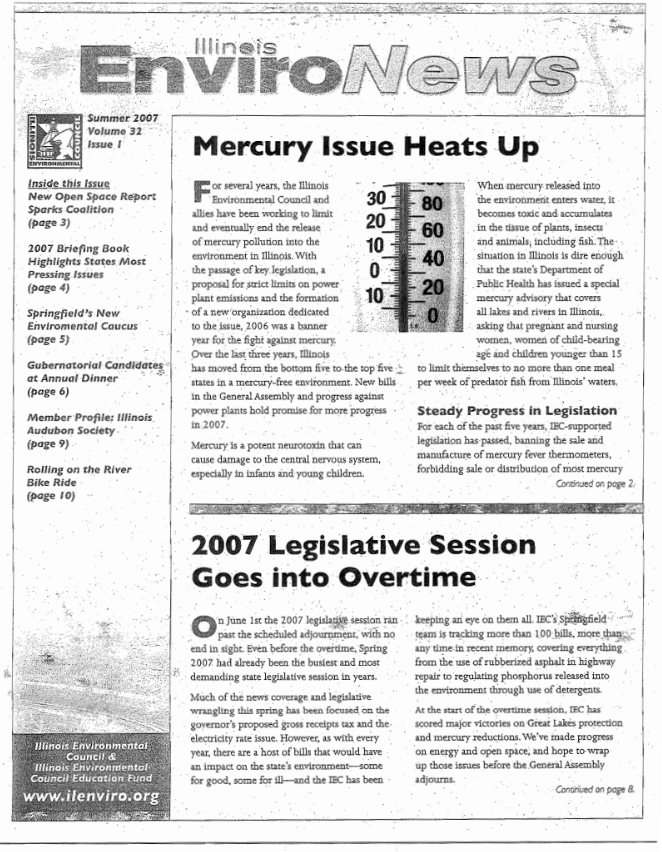
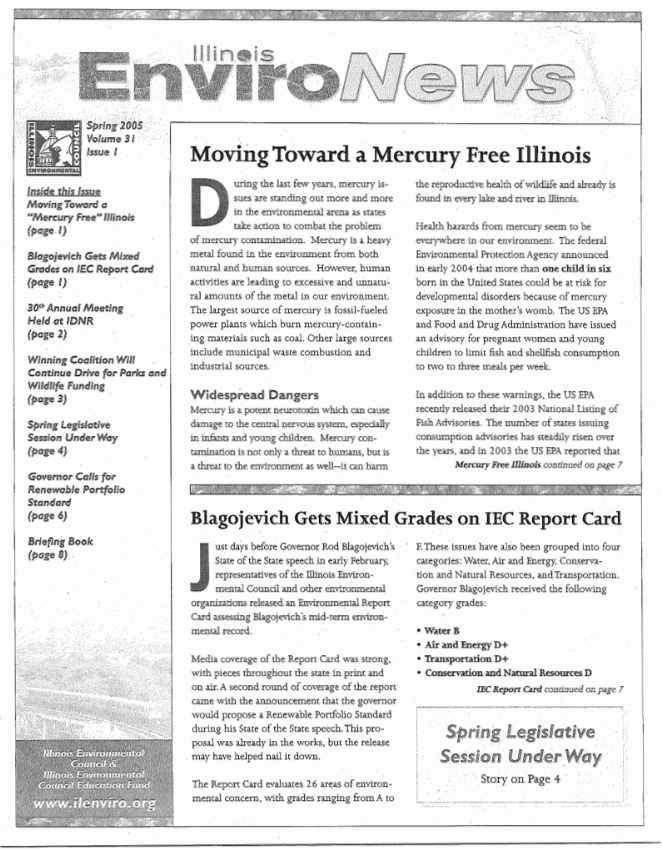
Soaring asthma rates. Skyrocketing gas prices. Shifting gardening zones. They’re all related to climate change.
The Illinois Environmental Council (IEC) is providing a forum to discuss how these diverse problems are connected to global warming and what Illinois residents can do to help solve them at a series of town hall meetings around the state this summer.
The first in the series, “Climate Change: How Does It Affect Decatur?” will take place Tuesday, June 24, at 6:30 p.m. at the J. Elizabeth Madden Auditorium of the Decatur Public Library, 130 N. Franklin St., Decatur. The event is free and open to the public.
“Climate change for some people is hard to take seriously, because it’s presented as a huge, nebulous threat,” said Jonathan Goldman, executive director of the Illinois Environmental Council. “Yet, on a local level in Illinois right now we have soaring asthma rates and gas prices and shifting gardening zones – very real problems that have the same causes and solutions as global warming.”
“So, everyone has a stake in helping curb climate change through individual and legislative measures,” Goldman said.
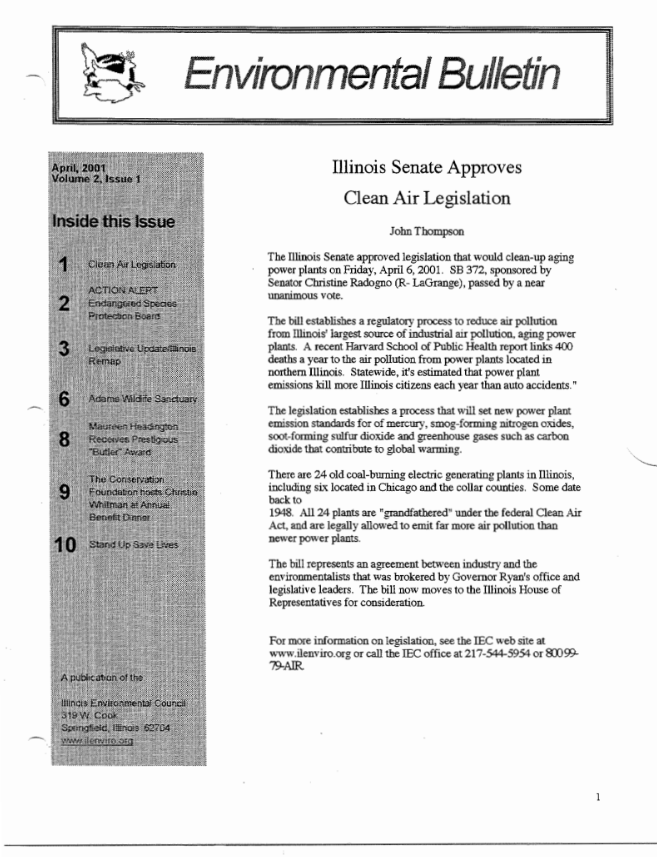
The town hall meetings will emphasize the legislative solutions to climate change featured in the Global Warming Response Act (SB2220/HB5254), a bill promoted by the Illinois Climate Action Network, a coalition of environmental, health and faith groups formed in 2007. The legislation contains initiatives that build on the recommendations of Illinois’ Climate Change Advisory Group formed in 2006.
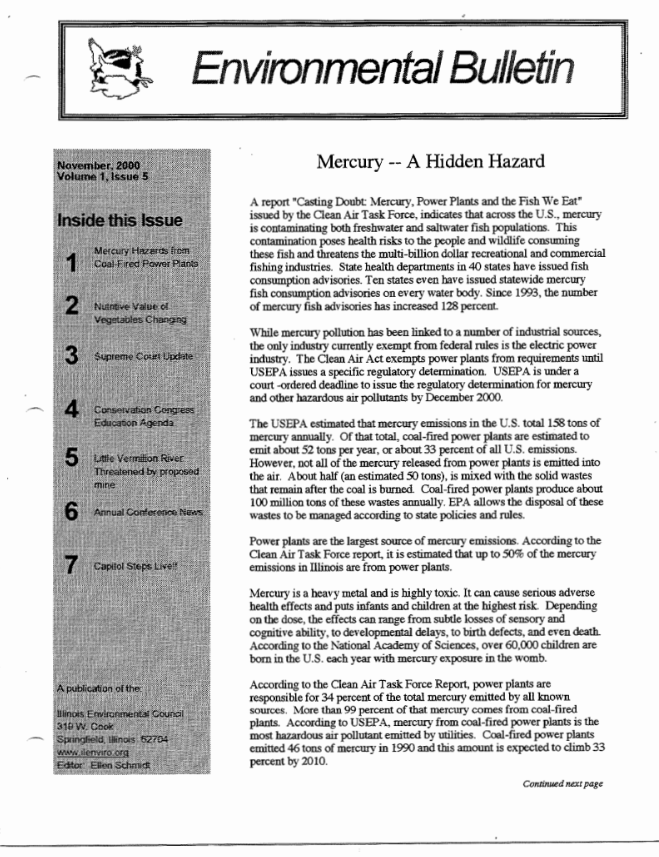
They include requiring power and industrial facilities to pollute less through a cap-and-trade program, and making cars more fuel efficient and buildings and furnaces more energy efficient. All of these measures would reduce the amount of greenhouse gases and smog-forming pollution generated and lower the incidence of respiratory illnesses in Illinois, which has one of the highest death rates from asthma in the nation.
In addition, more fuel efficient cars would mean substantial consumer savings at the
pump. A recent study conducted by Environment Illinois indicated the Illinois Clean Cars Act(HB 3424/SB 2238), a component of the Global Warming Response Act, would save Illinois drivers more than $400 a year in fuel costs.
In addition, a recent poll conducted by InTouch showed that a remarkable 90 percent of Illinois residents say they want cleaner, more fuel-efficient cars even if they cost more up front.
“The time is right for good legislation that will enable Illinois citizens to help the environment while helping the economy and our health at the same time,” said Goldman. “The people’s will is there – now we have to build the political will, which is what these forums are all about.”
Sponsored by IEC, the town hall meetings will be co-hosted by local community groups in each region. In Decatur, representatives from the local Community Environmental Council, Agricultural Watershed Institute, Audubon Society and Environmental Affairs Council of Millikin University will be on hand to discuss global warming and encourage local residents to get involved in solving the problem.
Don Wuebbles, a nationally known climate change expert and co-author of the 2004 “Confronting Climate Change in the Great Lakes” report by the Union of Concerned Scientists and Ecological Society of America, will also speak at the town hall meeting. Wuebbles and a colleague, Katherine Hayhoe, recently completed a detailed impacts analysis for the City of Chicago’s Climate Change Task Force. He is also a member of the government working group doing the U.S. national climate assessment that will be completed in October.
Decatur legislators Rep. Bob Flider, Rep. Bill Mitchell and Sen. Frank Watson have also been invited.
“The goal of the public forum is to bring legislators and voters together to spark a discussion about what Illinois and its residents can do about this environmental problem,” said Decatur resident Jo Caulkins, a board member of the Community Environmental Council. “Illinois is the seventh largest contributor of global warming pollution in the country, so we have a responsibility to do something about it.”
For more information about this event or others planned around the state, call the IEC at 217-544-5954.
###