
Sergio Vargas
Chicagoland Conservation Policy Manager
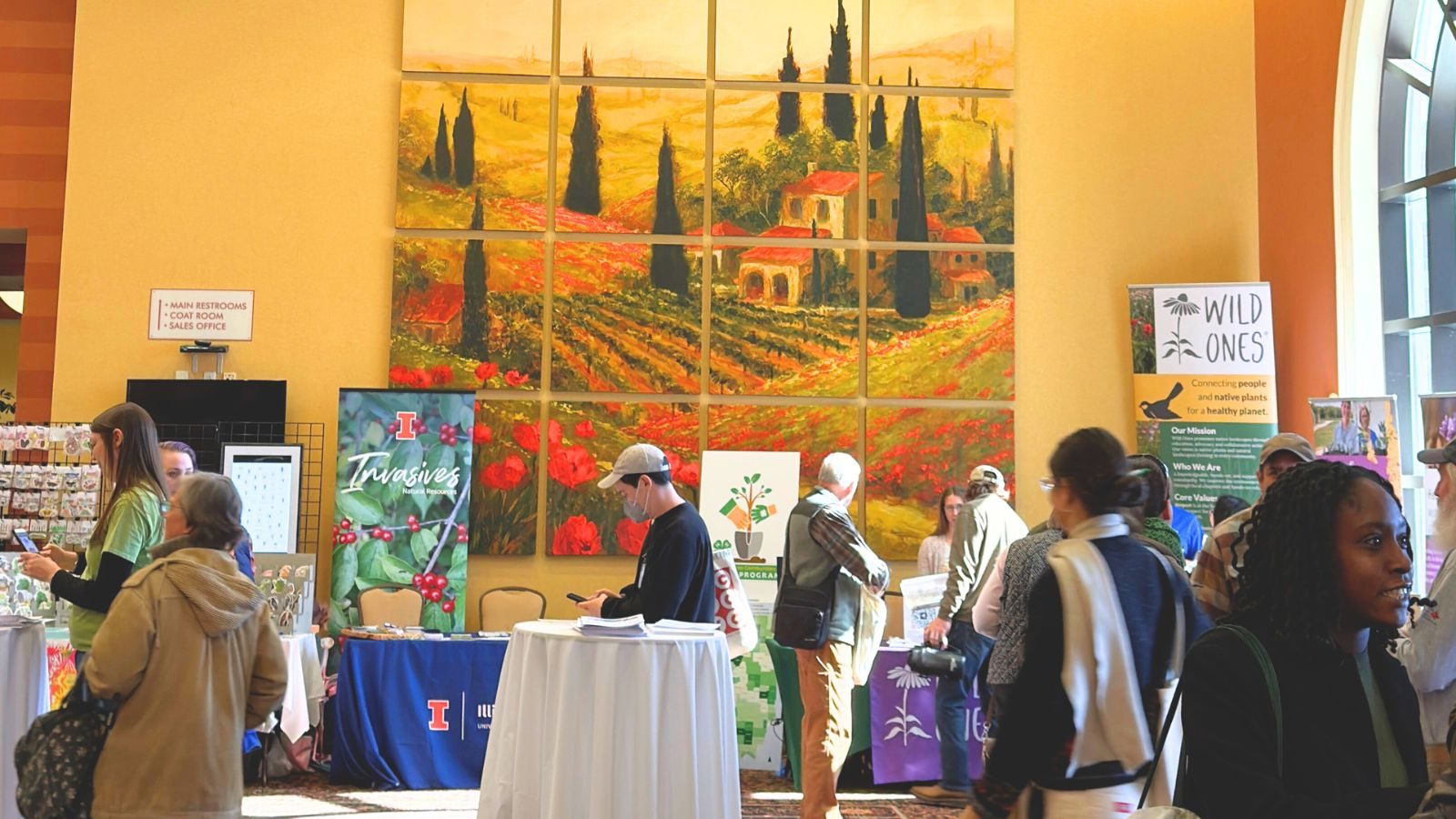
I was proud to represent the Illinois Environmental Council (IEC) at the 2026 Wild Things conference. I trekked my way down the day before, departing from Chicago’s Union Station on the Texas Eagle Amtrak. Once at St. Louis’s Gateway Station, I rode the Metrolink east into Illinois, getting off at the Shiloh-Scott stop before hopping onto the Metrobus to my hotel. It was a long and cold journey, soon to be rewarded with the warmth of fellow conservationists.
The next morning, I spent the 10-minute walk from my hotel to the conference venue eager to see familiar faces and meet new ones. The opening plenary session was led by Jay Young from the American Indian Museum. Last summer, IEC coordinated a legislative tour of the American Indian Museum with Jay.
We brought Sen. Graciela Guzmán and Rep. Laura Faver Dias to the museum, and together learned about its ongoing programming and the strength of the indigenous community, which finds strength in passing on traditional ecological knowledge. Energized by Jay’s talk, I was ready to learn and find new inspiration.
Spotted: Sturgeon
Father-son duo Jeremie and Alex Bacon led the first session I attended. They detailed the planning and community-building necessary to transform the Heritage Quarries Recreational Area, formerly an industrial landscape in Lemont, Illinois. After several years, the area is now rife with rare plants, bird communities, and other wildlife. Jeremie mentioned two instances where large sturgeon were seen swimming in the quarry. Their work exemplifies the importance of local conservation and shows one of many paths for replication across the state.
Practical Strategies and Birds
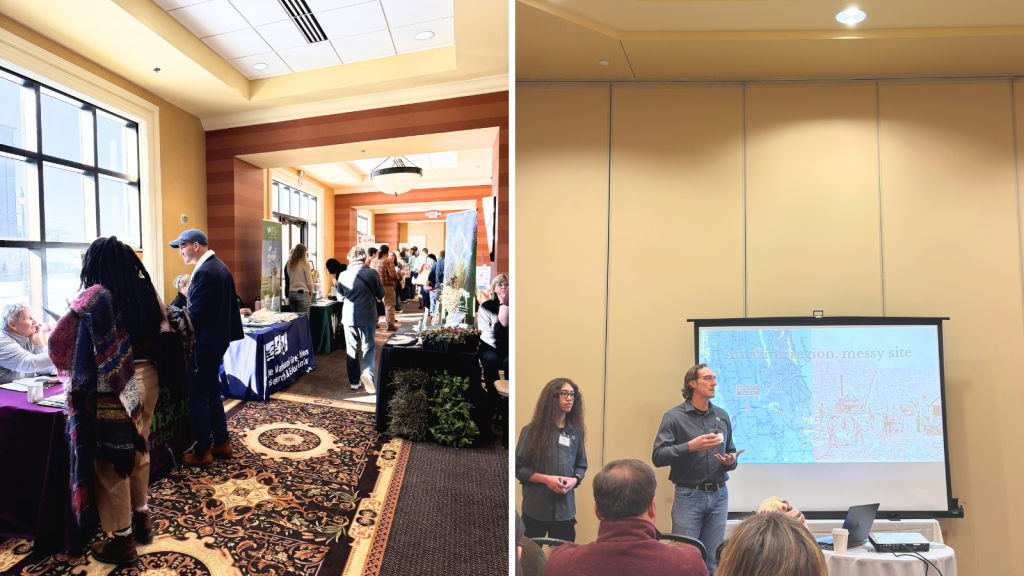
Next, I attended Breanna Bertacchi’s “The Greenspace Revolution” session, where she guided the audience through thinking about green spaces in their own communities and the challenges they might face. Breanna, Board President of Out Our Front Door, leads immersive bike tours that educate on history and local habitats. Inclusivity as a pillar of community building is critical to corralling local support and strengthening the defense of these spaces in the face of development or other pressures. As part of the workshop, we talked about common barriers that a community organization might face. Opportunities to align our values with practical strategies include:
- Ensuring strong agendas and action items
- Thinking about physical access and meeting timing
- Inclusive programming
The last session I attended was Professor of Wildlife Ecology Mike Ward’s presentation on mapping migratory birds in Illinois. His passion shone as he recounted amazing stories of unusual bird activity, including one that miraculously hit several Motus (Latin for “movement”) receivers along its journey through Illinois and then Detroit toward Toronto. The resilience of these birds is even more reason to support wetland conservation in the state. Wetland-dependent bird populations have increased over the past several decades, while other habitat-dependent birds have experienced declines.
Wild Ones to Wild Things
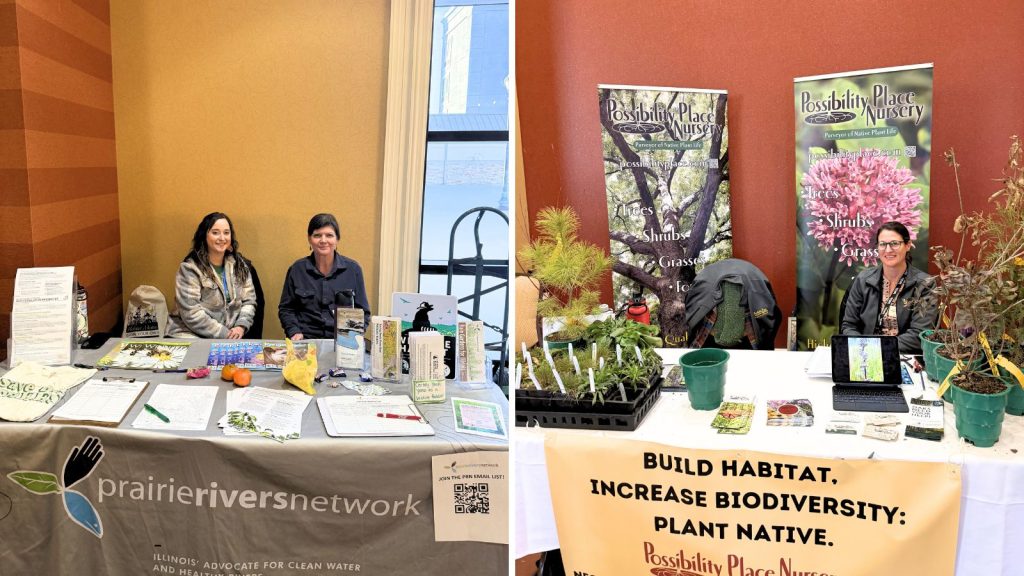
At 3 pm, it was time for the panel I was part of, “From Wild Ones to Wild Things,” advocating for conservation at both the state and local levels. Moderated by Amy Doll, Director of Friends of Illinois Nature Preserves, I was joined by Josh Nelson, Development Director of Wild Ones, and Christine Favilla, Three Rivers Project Coordinator at Sierra Club.
We talked about the biodiversity crisis and the successes and challenges our movement faces in making bold solutions a reality. Engaging locally, connecting with decision-makers, and amplifying the often invisible work of stewardship were mechanisms we highlighted as levers for building momentum year-round, especially during the legislative session.
IEC has seen rising opposition from national groups representing petrol and corporate interests; however, as IEC CEO Jen Walling states, “To me, it means that we are doing all the right things. We’re proposing strong bills that worry big polluters. It means our power is growing, and they’re bringing out the big guns. And it means we’re poised for even greater fights ahead.” Building people power is key to building legislative power, and IEC is working tirelessly with our coalition partners to ensure we’re firing on all fronts. That’s why I believe community-wide gatherings like this conference are so valuable to our mission here at IEC and our shared work across the movement.
Heading Home
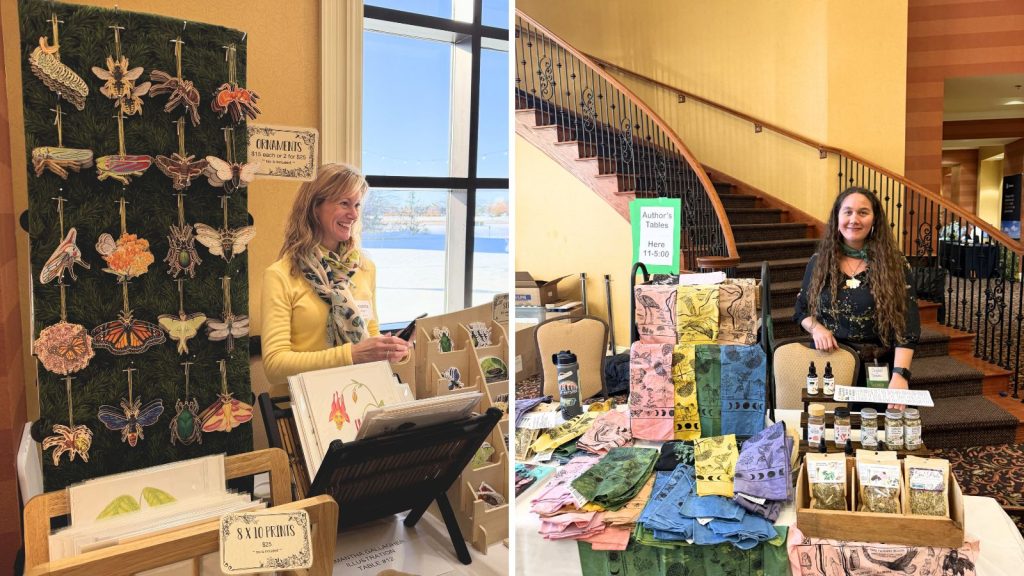
I wrapped up the conference by making introductions and talking to tabling participants. I embarked on my journey back home to Chicago. Flush with stickers and T-shirts, I’m energized and optimistic about the state of conservation, knowing we have such a powerful community willing to join the fight.
About the Author
In 2022, Sergio joined the massively successful Vote Yes Campaign that resulted in an annual increase of $40 million in the Forest Preserve District of Cook County’s coffers. In early 2024, Sergio was appointed to the steering committee for the Chicago Wilderness Alliance. This work allows him to help guide the region’s overall conservation vision.
Read more by Sergio: