Team IEC
Empowering environmental champions in Illinois’ General Assembly requires building strong relationships with our legislators. These educational tours are a critical piece of that work. We share great experiences with our legislators and partners. We even took a record number of tours by canoe this year! From forest preserves in Cook County to farms in southern Illinois, Illinoisans are demonstrating environmental stewardship is alive and well. Read on to see the places we went and the folks who made these tours memorable.
Check out IEC Chief Programs Officer Lindsay Keeney’s blog on why we started these tours and the value they bring to our movement.
Decatur CEJA Workforce Tour
March 31
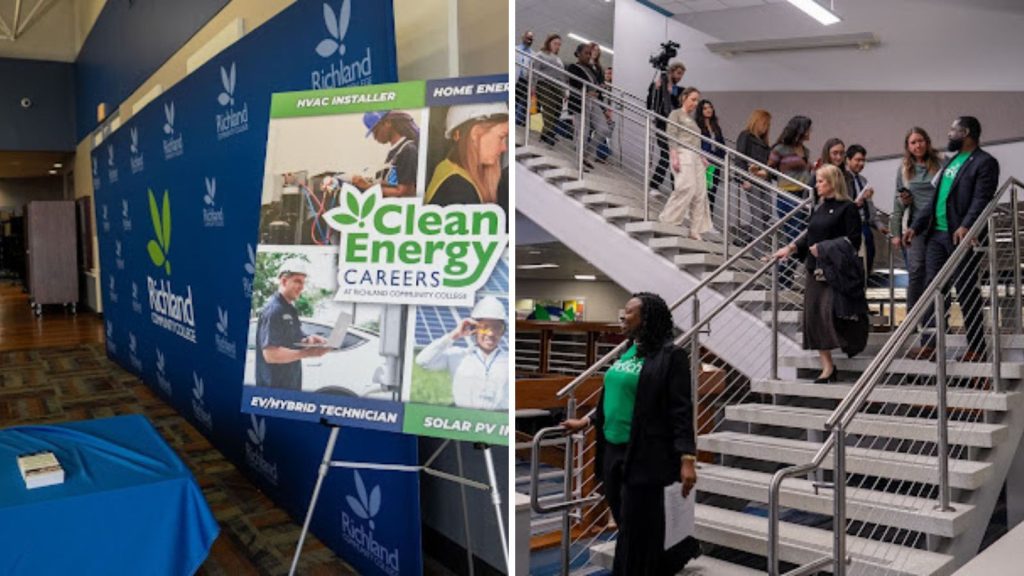
IEC worked with Richland Community College (RCC), the Illinois Department of Commerce and Economic Opportunity (DCEO), and local partners to highlight RCC as a leading example of Illinois’ CEJA Workforce Training Hubs in Central Illinois. The tour demonstrated how state investments are creating career pathways in the clean energy sector. Legislators, industry leaders, and stakeholders experienced firsthand how RCC’s existing EnRich Essential Skills program, coupled with a new Climate at Equitable Jobs Act-funded Clean Energy Careers program, is equipping Illinois with a skilled workforce to support the state’s clean energy transition.
A tour of TCCI Manufacturing, a key industry partner, further illustrated how CEJA Workforce Hubs are bridging education and industry to drive economic growth and job opportunities while achieving Illinois’ climate goals. TCCI is not only an industry partner building a manufacturing hub in Decatur, but is also working with RCC to train and hire graduates from the CEJA workforce program.
Gichigamiin Indigenous Nations Museum
April 15
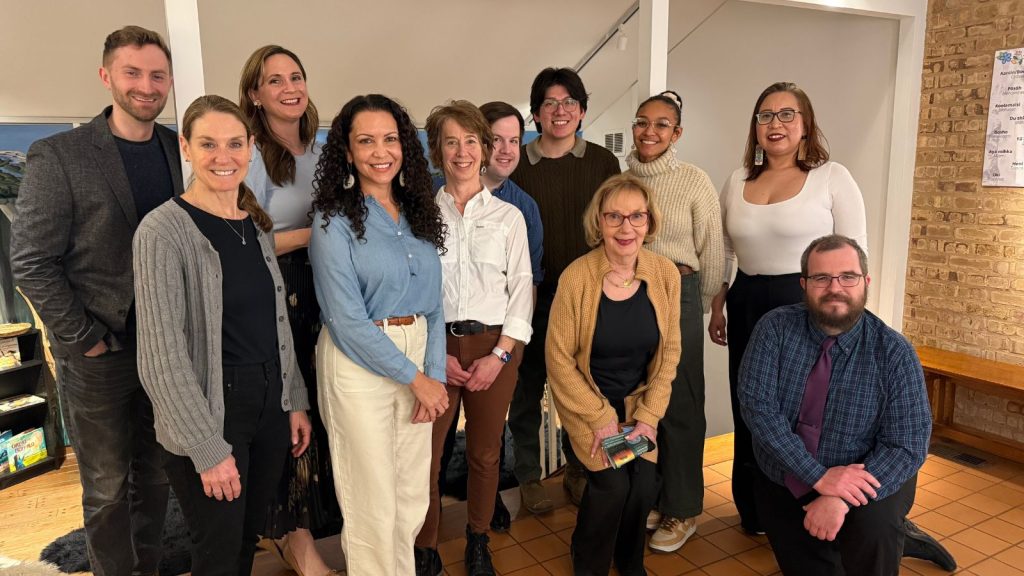
IECEF organized a tour of the Gichigamiin Indigenous Nations Museum in Evanston with Sen. Laura Fine and State House Majority Leader Robyn Gabel. This tour engaged participants with Indigenous perspectives on land stewardship, water protection, and cultural heritage. Decision-makers gained a deeper understanding of how traditional ecological knowledge informs modern conservation practices. This tour also had tangible, immediate-term impacts.
Loda Prairie
June 9
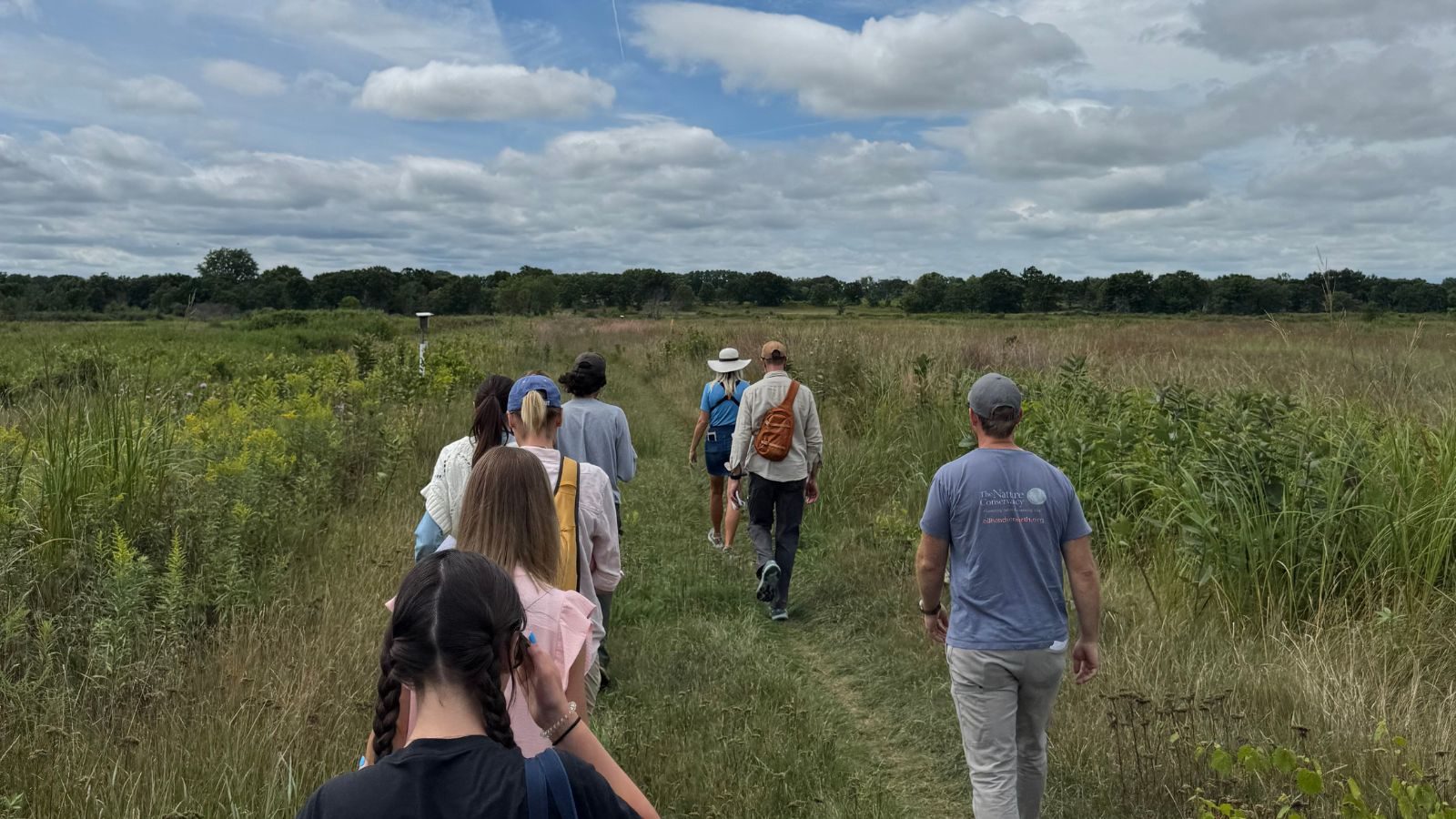
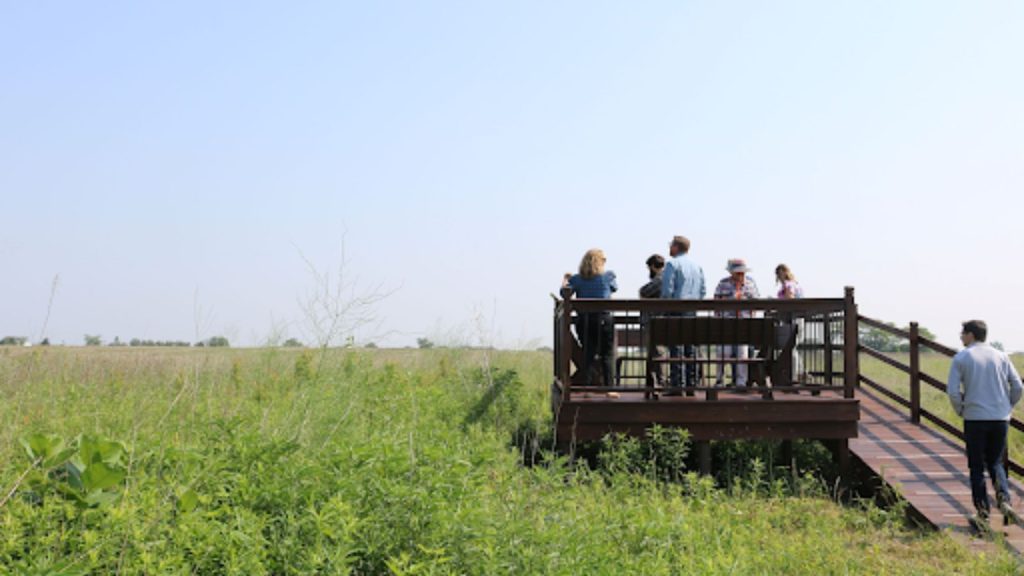
IEC joined Sen. Balkema, Rep. Bunting, community members, Grand Prairie Friends staff, and board for a tour at Loda Prairie. We were able to see one of the few remaining native prairies in Illinois. This tour highlighted a partnership between Grand Prairie Friends and Loda Township. We learned how powerful strong relationships with neighboring landowners can be for mitigating risks and land use conflicts. The township and the land trust partnered on a buffer zone around the project to protect the prairie. On this tour, we also discussed the impact of federal funding loss and state budget cuts. We were thankful to have such supportive decision makers on the land to help brainstorm solutions.
DuChick Farm
June 23
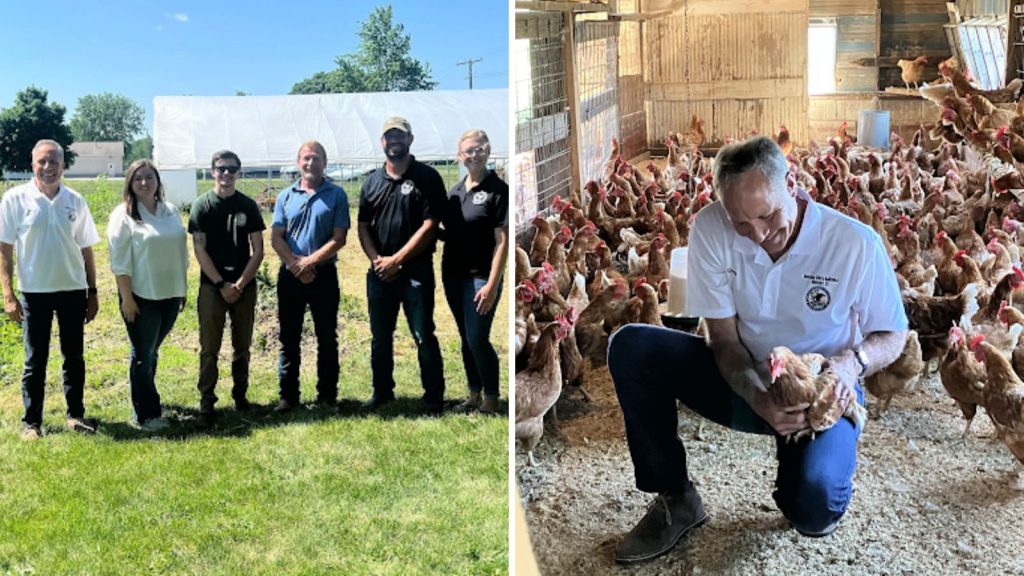
IEC joined Sen. Balkema, Rep. Bunting, and the County Farm Bureau for an informational tour of DuChick Ranch, owned by Ed Dubrick, to discuss the importance of programs that support local food and the farmers who produce it. Programs such as LFIG and GFPP support the infrastructure needed to support the farmers growing for their local communities. Attendees were able to see Ed’s poultry operation and hear how legislation like the Processing Exemption Bill benefits small and beginning farmers across Illinois. While touring the produce area of the farm, attendees noticed the berry patch had burnt and curled leaves. Ed explained that what they were seeing was a result of herbicide drift from the adjoining farm.
Franklin Farm
June 26
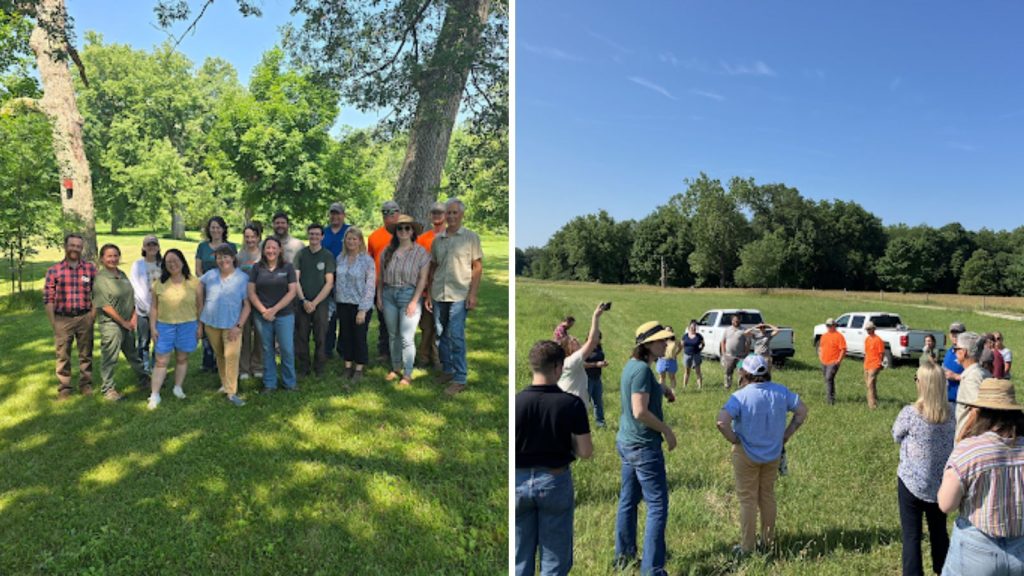
On June 26, we partnered with TNC, to tour Franklin Farm in Lexington, Illinois. Attendees included Rep. Chung, Rep. Deering, Sen. Balkema, as well as folks from TNC, ISA, Parklands Foundation, McLean County SWCD, and National Farmers Union. The tour of the property included prairie restoration, three experimental wetlands, and part of the Mackinaw River. We discussed cover crops, the role of wetlands in reducing nutrient loss, conservation easements, and invasive species management.
American Indian Center
July 25
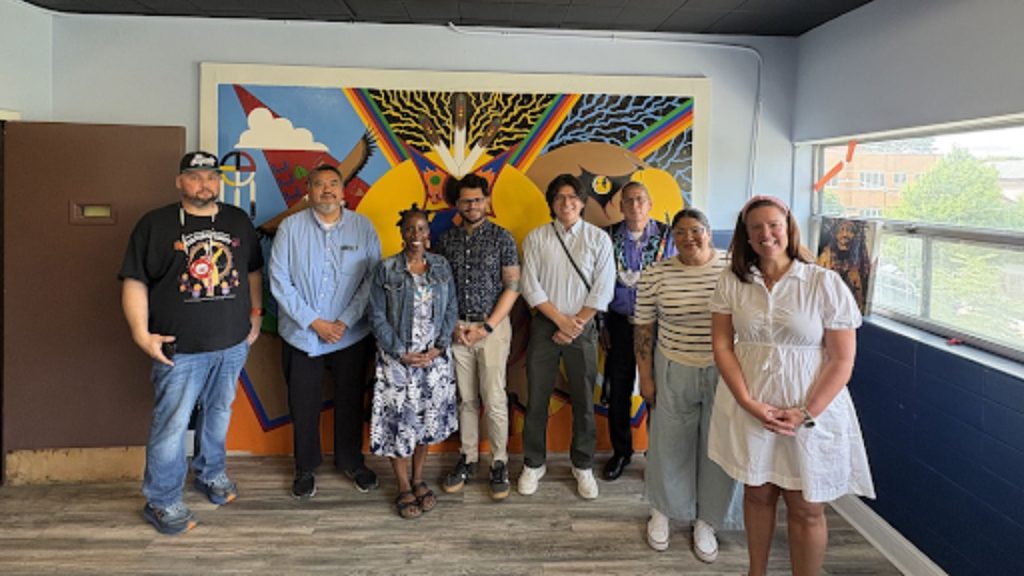
IECEF joined Sen. Guzmán and Rep. Faver Dias for a powerful tour of the American Indian Center. Participants learned about the intersection of conservation and agriculture, including the center’s program that provides weekly meals and aims to grow culturally significant plants in their small outdoor garden. Chicago’s American Indian Center is the only one of its kind in the United States without land, which sparked a conversation about what righting historical wrongs looks like in today’s context and elevating indigenous needs when discussing land management. During the visit, Sen. Guzmán and Rep. Faver Dias also confirmed that $35,000 in immediate state funding for the center (floors, chairs, and other building essentials)—which had been allocated in a prior budget but had inadvertently lapsed—is available. The discussion laid the groundwork for possible future funding for the center, demonstrating the tangible benefits that can result when community members and decision-makers have opportunities to speak directly with one another.
BNSF Railyard Tour
August 14
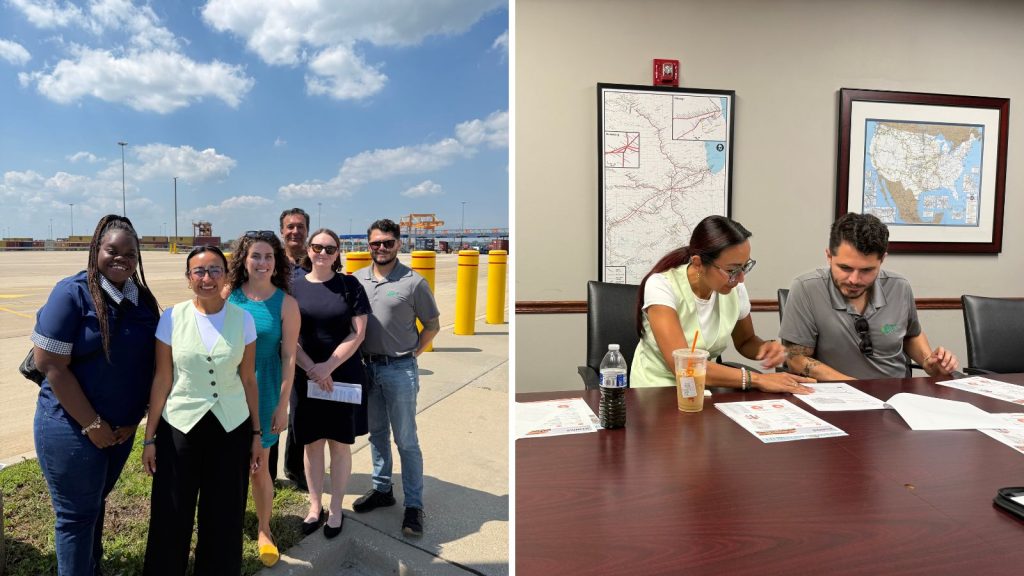
IEC joined State Rep. Dagmara Avelar and Congresswoman Underwood’s district staff for a tour of BNSF Railway in Illinois, gaining a behind-the-scenes look at one of the nation’s largest freight rail networks and its vital role in supporting the state’s economy, workforce, and communities. BNSF leaders shared insights into operations, infrastructure investments, and sustainability efforts. At the same time, discussions with Rep. Avelar focused on workforce development, environmental practices, and opportunities to expand capacity and strengthen community partnerships. The visit highlighted both the challenges of maintaining and modernizing infrastructure and the importance of collaboration between policymakers and industry leaders to ensure rail continues to drive economic growth, connect communities, and deliver sustainable solutions for the future.
Dayton Bluffs
August 14
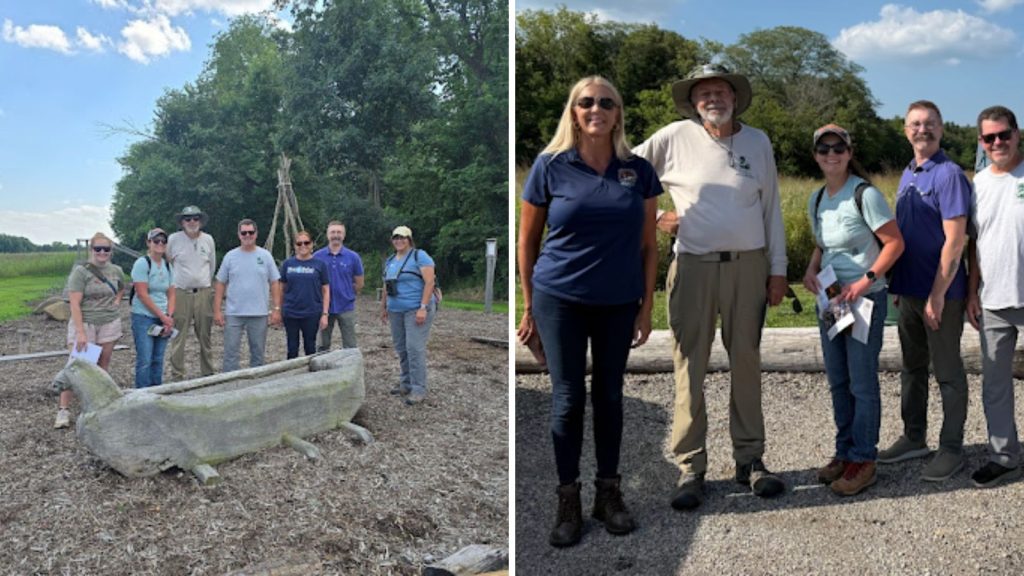
On August 14, we toured Dayton Bluffs Preserve with Sen. Rezin and Rep. Briel. Friends of Illinois Nature Preserve Executive Director, Amy Doll, The Conservation Foundation’s Brook McDonald, and Ottawa Mayor, Robert Hasty also joined us.
During our visit to the Dayton Bluffs Preserve with legislators, we were struck by the place’s raw and timeless beauty; woodlands, rugged ravines, and open prairie stretching down to the Fox River. We talked with them about the deeply layered history here, from Native American burial mounds to the pioneer cemetery, and walked through restoration zones where volunteers are working to eradicate invasive species and rebuild native prairie habitat. Our hosts shared how The Conservation Foundation partnered with the City of Ottawa to protect and manage this 253-acre sanctuary, and pointed out how its designation as a Land and Water Reserve is more than symbolic; it’s a commitment to ecological stewardship and community access.
Robbins Heritage Park
August 21
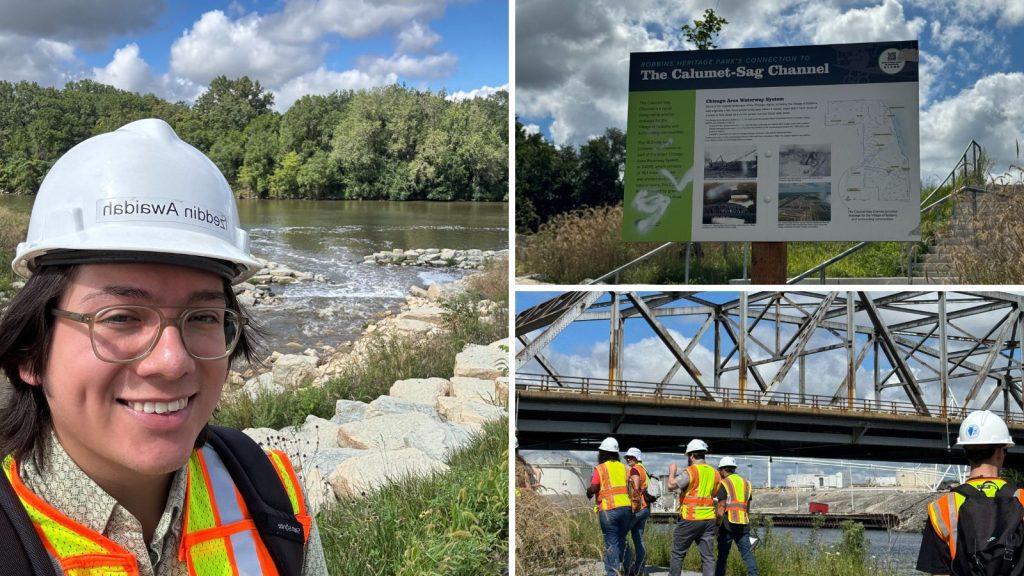
A guided tour with staff from the Metropolitan Water Reclamation District showcased nature-based solutions by providing an on-the-ground look at a completed diversion channel that conveys stormwater away from flood-prone neighborhoods and ongoing stormwater park and restoration work along Midlothian Creek. The tour group included senior MWRD leaders and civil engineers overseeing stormwater strategy, giving our stakeholders direct access to technical leadership for this large project.
Wild Mile Tour with Rep. Theresa Mah and Superintendent Carlos Ramirez-Rosa
October 8 and November 3
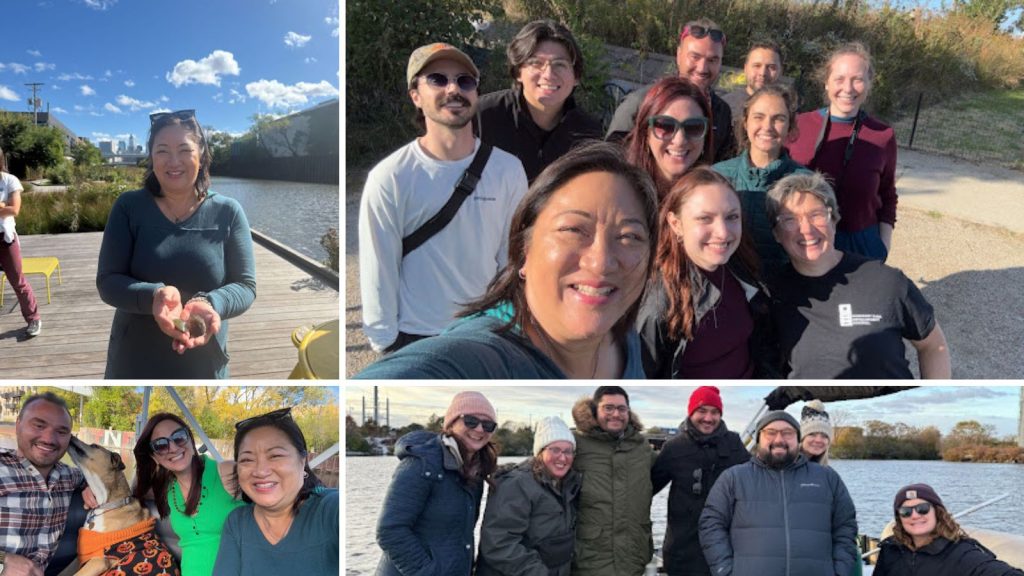
IECEF joined Urban Rivers for a tour of the Wild Mile, a floating ecopark born from the efforts of community groups, architects, and others to create a public space that also has features of a wetland. Rep. Theresa Mah joined us as we hopped on Urban Rivers’s boat for a tour that spanned the width of her district, highlighting industries in the area, environmental projects, and the beauty of local waterways.
During the tour, our group passed by friends from Metropolitan Planning Council and McKinley Park Development Corporation, IECEF partners that were literally discussing the Chicago River and giving Leader Mah a chance to interact with constituents. On a second trip, CEO and Superintendent of the Chicago Park District Carlos Ramirez-Rosa as well as friends from IDNR and Shedd Aquarium toured the new floating islands at Bubbly Creek to discuss important restoration efforts at this site.
Prairie Fruits Farm
August 21
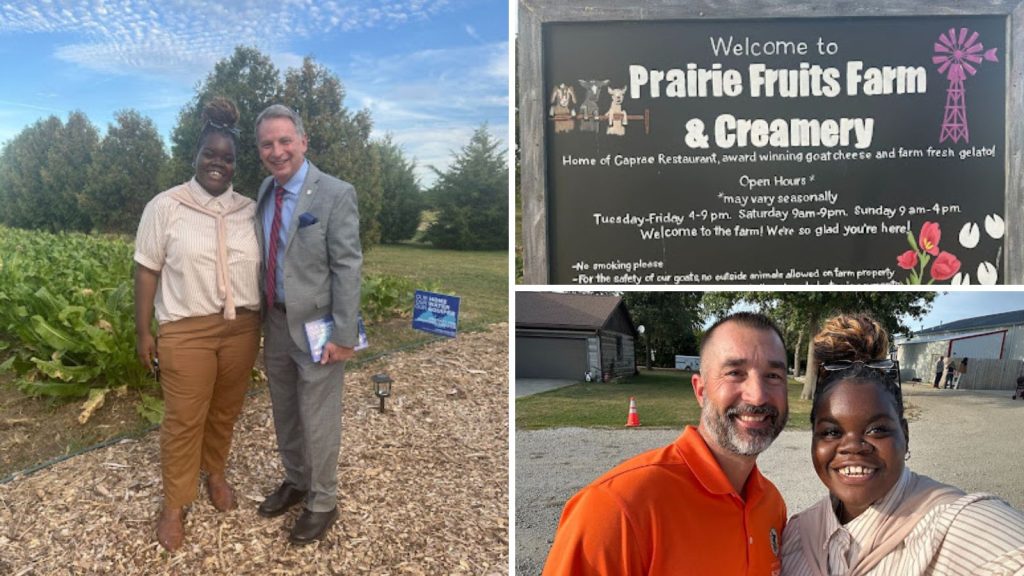
Our Sr. Policy Manager, Cate Caldwell, visited Prairie Fruits Farm & Creamery, a nationally recognized goat dairy just north of Urbana-Champaign that has transformed row-crop land into a growing farm of goat pastures, orchards, and restored prairie. Founded in 2004 and now owned by Lauren and Jeffrey Brokish, the farm raises around 100 goats in a rotational pasture system. On this tour, we learned about innovative silvopasture practices that reduce greenhouse gas emissions, and got to taste some of the farm’s award-winning cheeses in its on-site creamery. Beyond the goats, the farm grows organic fruits and vegetables across five acres and is home to Caprae Restaurant, where local ingredients are used and can be bought. What struck me most was the philosophy that you are what you eat, with tour guides explaining that their goats graze on diverse grasses and tree leaves, resulting in seasonal milk that reflects both the land’s biodiversity and the humane care given to these “working girls.”
Motherland Gardens
August 26
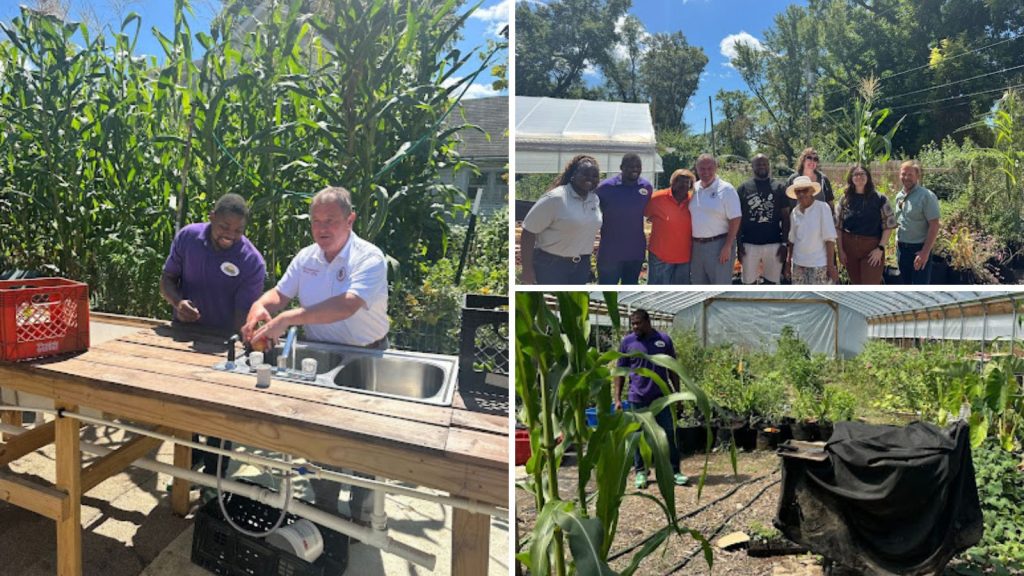
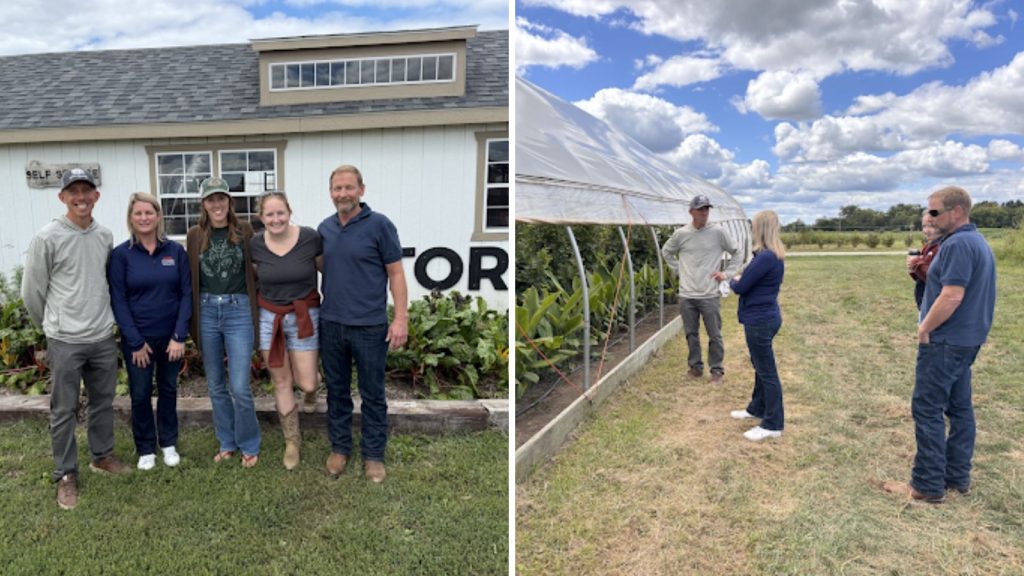
Our IEC team joined State Rep. Mike Coffey and the Illinois Stewardship Alliance for a tour of Motherland Gardens in Springfield, where Founder Yves Doumen and Community Outreach Specialist Kathy Villard shared the garden’s history, challenges, and vision for the future. Our discussion highlighted the economic impact of their work, funding needs, and plans to expand education initiatives, connect residents with healthy local food, and hopefully soon be able to sell produce at the farmers’ market. The tour showcased the garden’s micro-pantry addressing food insecurity, a new high tunnel extending the growing season, and even a hands-on moment where Yves guided Rep. Coffey in washing fresh produce. Coffey expressed strong support for providing resources to sustain and grow the garden, while also noting his commitment to local markets, emphasizing the importance of connecting communities with fresh, local food.
Alton CEJA Hub
August 27
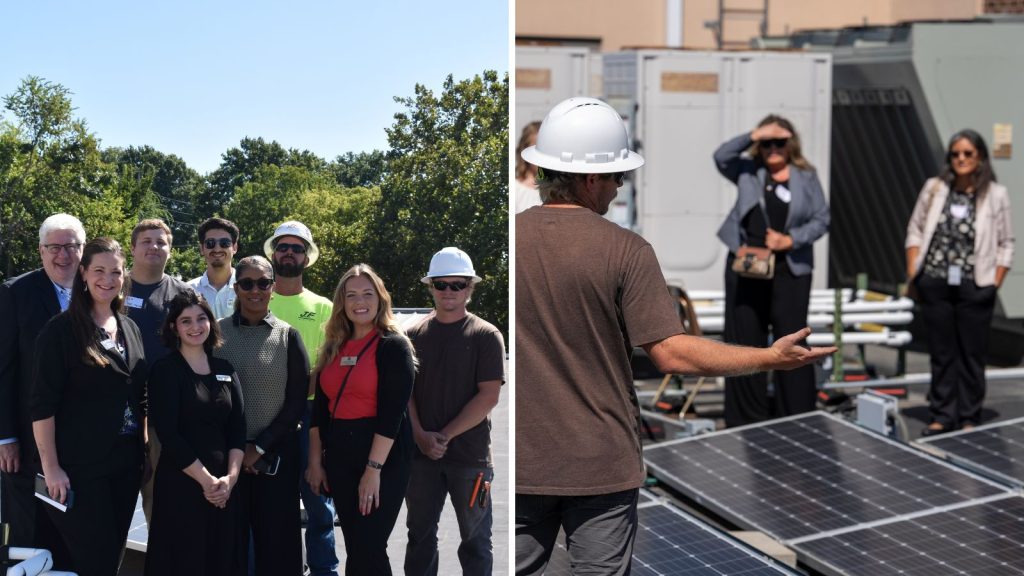
IEC’s energy and communications team members, including Dany Robles, Samira Hanessian, Francisco Lopez Zavala, and Hannah Flath, worked with Lewis & Clark Community College (LC), The Department of Commerce and Economic Opportunity, and local partners to host a CEJA Workforce Hub Tour to showcase CEJA’s positive impact on the Alton community to legislators, local press, and regional adovacates who helped in the passage of CEJA. This event included conversations with training instructors and LC staff about how CEJA helps provide clean energy training opportunities, a description of the wealth of wrap-around services provided to training participants, a demonstration of an ILSFA-funded rooftop solar installation, and an opportunity for legislators and other community partners to learn more about CEJA programming in Alton. Alton stood out as a beacon of clean energy progress in Southern Illinois, and this tour helped elevate the workforce hub as a role model for future CEJA hubs set to go online in 2026.
MWRD Calumet Plant tour
September
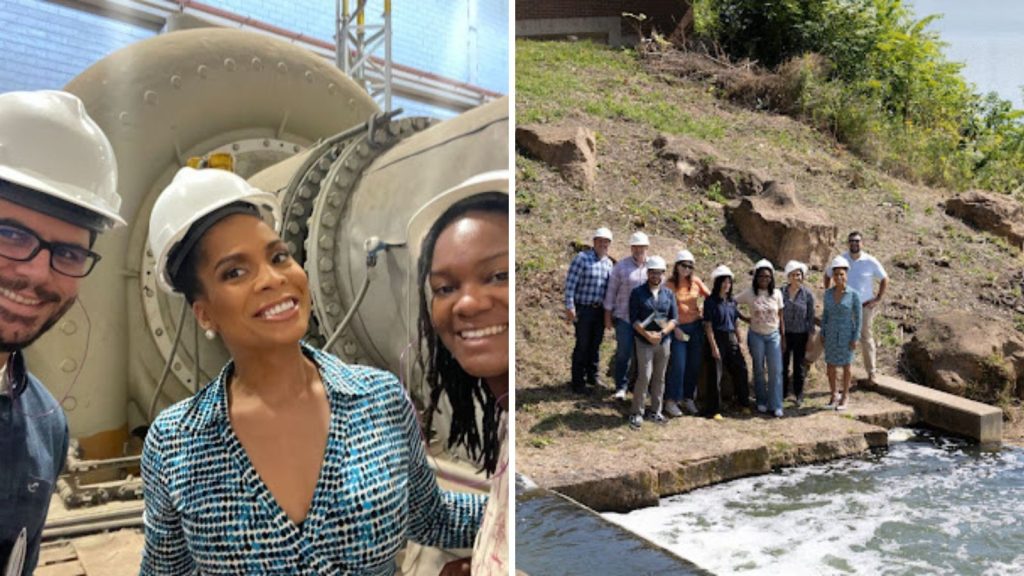
In September, IEC and affiliate members, Friends of the Chicago River and Center for Neighborhood Technology, along with Metropolitan Water Reclamation District (MWRD) Commissioner Precious Brady-Davis, toured the oldest wastewater treatment plant serving Chicago and southern Cook County. Operating since 1921, the MWRD Calumet Plant processes up to 480 million gallons of wastewater per day, with a majority coming from industrial facilities. Its anaerobic digester produces gas that powers parts of the plant’s operations. To finish the tour, we visited a Sidestream Elevated Pool Aeration (SEPA) that was beautifully designed to resemble a waterfall along the Calumet River.
Lake Plain
August 29
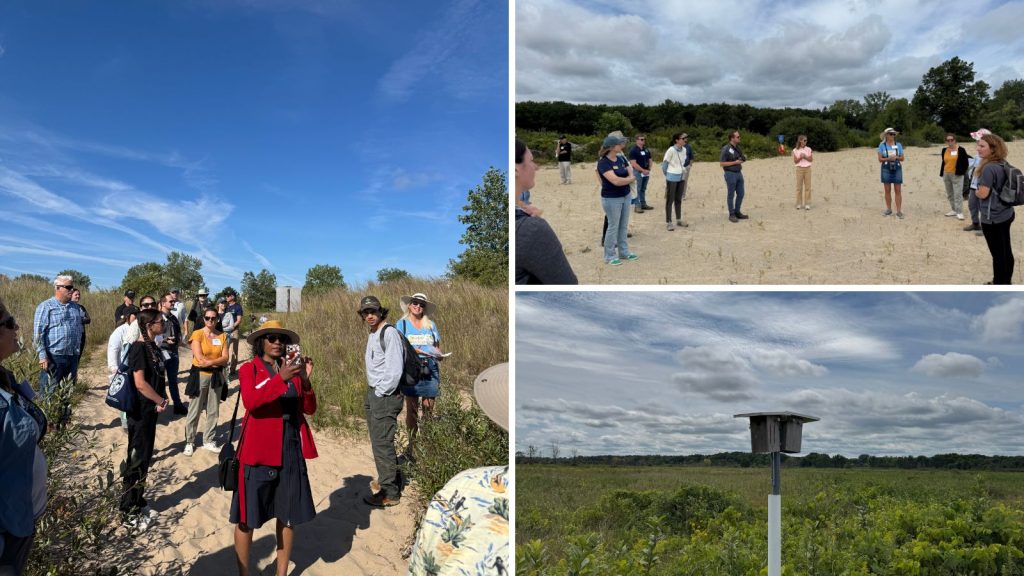
The Lake County Forest Preserves via the Lake Plain Coalition Agencies hosted a Lake Plain Tour to highlight conservation, restoration, and community engagement efforts across the coastal plain of northeastern Illinois. Attendees included a diverse mix of partners from local governments, state agencies, nonprofits, and community organizations, who joined to learn about ongoing projects and collaborative opportunities.
The tour showcased how restoration work across Lake Plain ecosystems, including prairies, wetlands, and lakefront corridors, is advancing biodiversity, water quality, and climate resilience in the region. Presentations emphasized the role of inter-agency partnerships and community engagement in sustaining these landscapes.
Fitchie Creek Forest Preserve
September 2
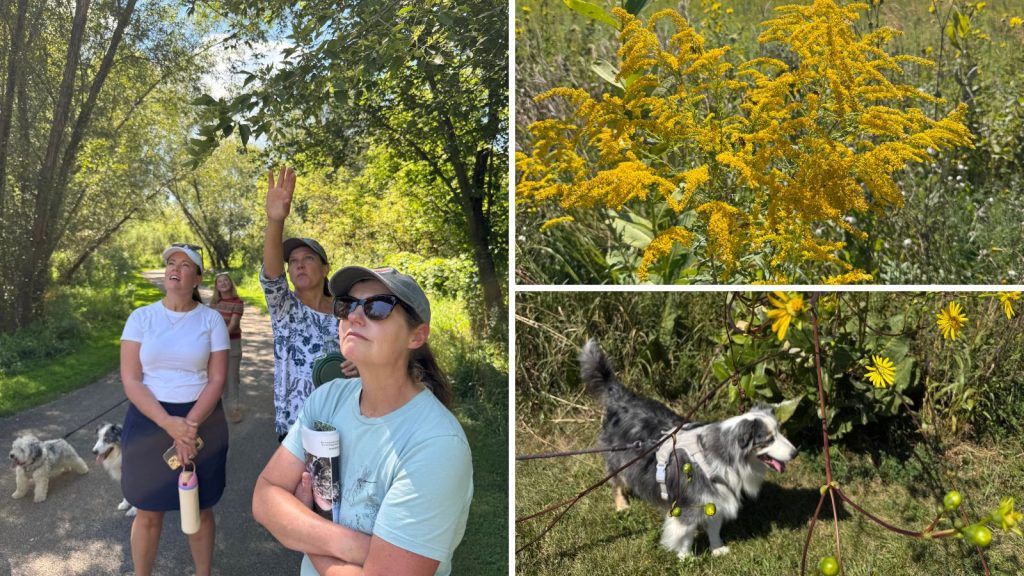
IECEF joined Rep. Faver Dias, Rep. Moeller, and staff from Rep. Eva-Dina Delgado’s office for a tour of Fitchie Creek. The tour spotlighted the urgent issue of herbicide drift from neighboring agricultural lands. Attendees walked the preserve, discussing how drifting chemicals not only threaten fragile ecosystems—damaging oaks, maples, understory plants, and prairie wildflowers—but also pose a potential risk to nearby residents and students. We passed by Prairie View Grade School, observing children playing nearby. The tour underscored the alarming possibility that the grass they play on may also be impacted by herbicide drift, highlighting the intersection between environmental health and public health.
Nexamp - Community Solar Tour
September 17
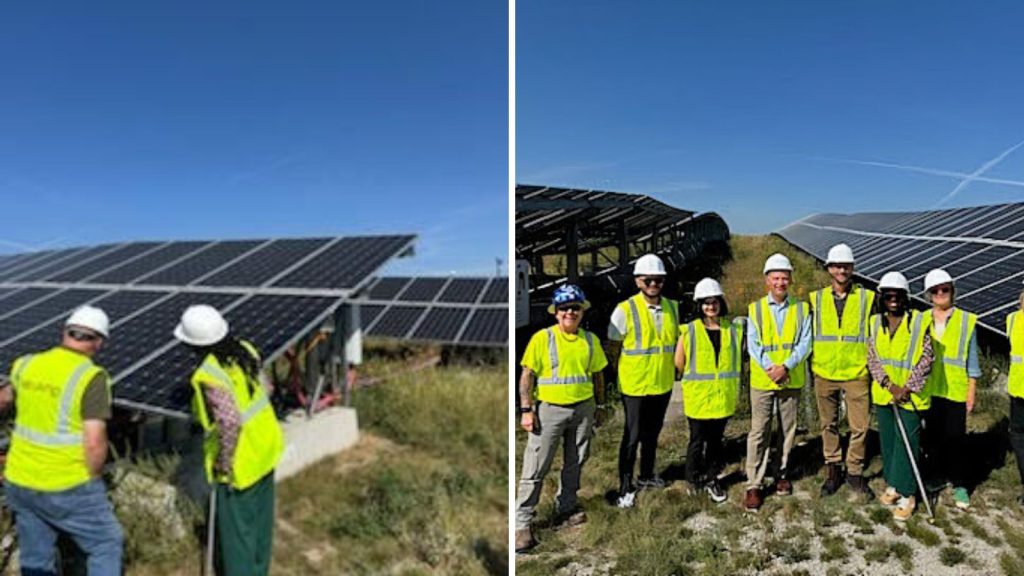
We toured Nexamp’s Solar Star Urbana Landfill East project in Urbana-Champaign, Illinois, with Senator Faraci and Representative Ammons. We were joined by Prairie Rivers Network’s Amanda Pankau and Andrew Rehn, Faith in Place’s Cindy Shepherd, and Citizens Utility Board’s Scott Allen. Solar Star is one of two co-located projects that occupy approximately 40 acres on a capped landfill, featuring nearly 14,000 solar panels and generating 5.3 MW of renewable energy. Surrounding the solar panels is a native pollinator garden. The project delivers savings to low- and moderate-income (LMI) residents through the Illinois Solar for All program, created under the Future Energy Jobs Act (FEJA) and expanded under the Climate and Equitable Jobs Act (CEJA). The project sends solar energy to the grid, and subscribers receive credits on their Ameren bill for their share of the energy produced. In addition to individual LMI residents, the City of Urbana is enrolled in the project to benefit from the savings while supporting the expansion of clean energy across the area.
Glacier’s End & Leaf Community Kitchen Tour
October 7
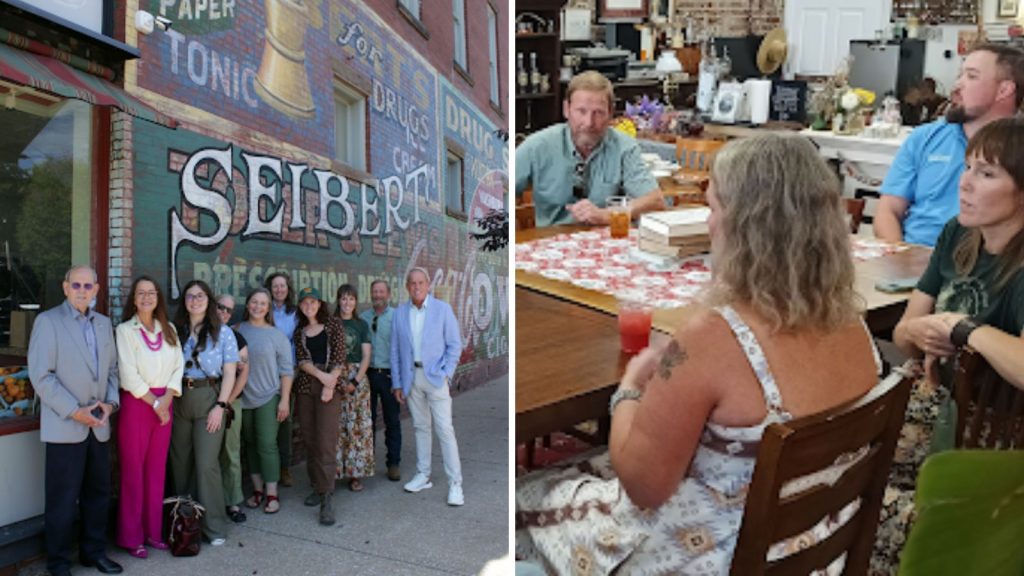
In downtown Carbondale, cottage food baker Liz DeRuntz and farmer Courtney Smith, both with LEAF Food Hub, a cooperative of 30+ farmers, guided lawmakers through their new community kitchen incubator project. They told us how this shared kitchen space will allow new food businesses to launch and grow while giving local farmers another outlet for the products they raise and sell. Lawmakers also got to see LEAF’s Mobile Farmers Market, which is traveling to food deserts throughout southern Illinois to provide fresh food access.
Liz and Courtney discussed how the work to create the Local Food Infrastructure Grant (LFIG) program made it possible for projects like theirs to secure funding that was otherwise not available. The LEAF Food Hub was awarded an LFIG grant to make upgrades to their community kitchen space that will further enable farmers to feed their communities.
In downtown Marion, farmers and food business owners Libby and Derek Ervin of Glaciers End had a long discussion about how work on the Illinois Cottage Food Law was the opening to their now growing lineup of locally grown and produced products from hot sauces, syrups, shrubs, and pickles. The Ervins also talked about regulatory challenges still in place in the state that limits where their products can be sold. Whether it’s a shared community kitchen incubator space or a commercial kitchen tied to a food and farm business, both are facing barriers with a lack of consistent and scale appropriate regulations for their businesses, which limit where they can sell their products. Sen. Dale Fowler suggested everyone getting together with his policy staff to work on potential legislation that could help Glaciers End with the new challenges that came from them moving to an Industrial kitchen.
Epiphany Farm
Rep. Regan Deering joined us at Epiphany Farms with The Illinois Stewardship Alliance and renowned chef and farmer Ken Myzska. Ken painted a picture of the farm as both a model for regenerative agriculture and a place where the dinner table can spark real social change. Beyond the farm itself, he and his team operate five farm-to-table restaurants throughout Bloomington, growing an incredible range of produce, including native crops like sunchokes and chestnuts, using permaculture principles and land-restoring practices that still keep the business viable.
He spoke candidly about the farm’s wins as well as the hurdles: outdated infrastructure, limited access to appropriately sized equipment, and zoning restrictions that hold small growers back. As we sampled fresh tomatoes, the conversation turned to the barriers that keep healthy, local food out of school cafeterias.
We’re grateful to Rep. Deering for taking the time to hear directly from farmers, and we’re excited to keep pushing for farmer-led policy solutions that help more Illinois farms and farm-to-table businesses succeed
Bloomington Normal Water Reclamation District water treatment
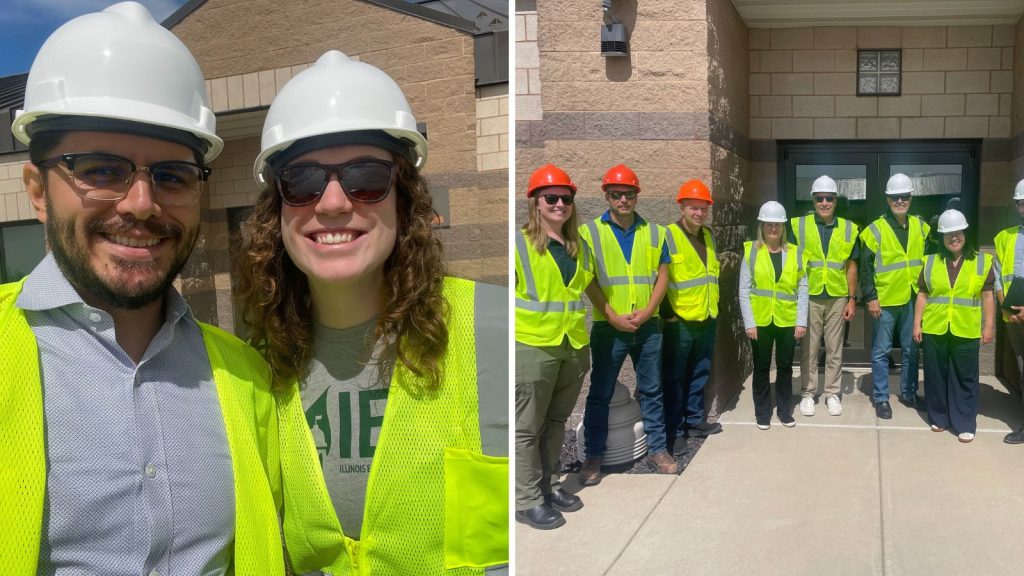
Tim Ervin, Executive Director of the Bloomington-Normal Wastewater Reclamation District (BNWRD), invited IEC and state legislators to join him on a tour of the Southeast Plant. Since BNWRD serves communities across district divides, Sen. Koehler, Sen. Balkema, Rep. Deering, and Rep. Chung were excited to learn about the innovative practices BNWRD was taking. We learned about the treatment process and how BNWRD is piloting nature-based solutions to remove PFAS, phosphorus, and other contaminants from treated water. We also discussed the successful bipartisan legislation from 2025 that now allows BNWRD to sell their treated effluent for non-potable uses, like concrete construction. Legislators were particularly interested in BNWRD’s efforts to regionalize and take on non-compliant water systems to improve sanitation for rural communities.
Climate Action Museum
December 15
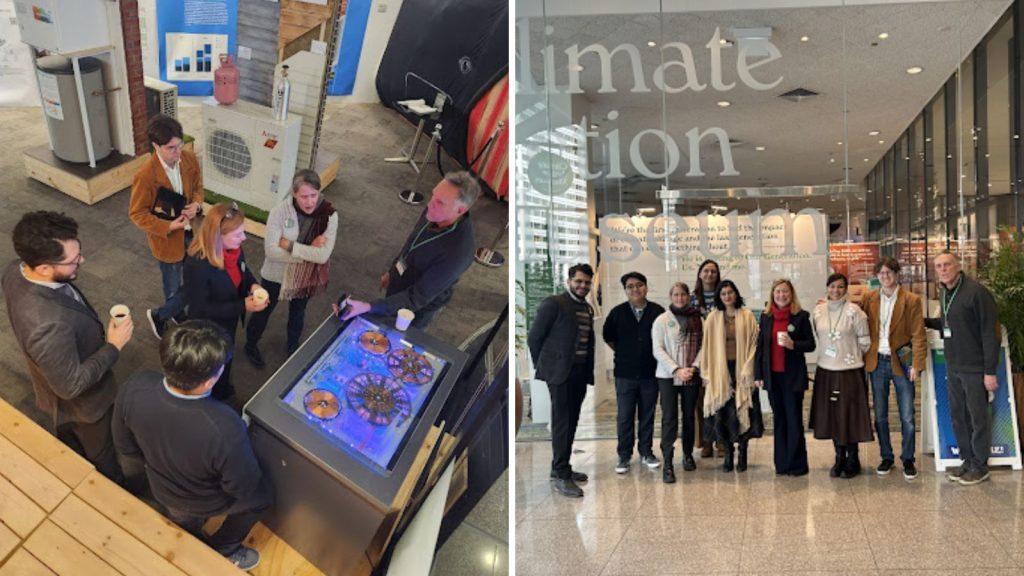
IECEF hosted a climate celebration in a cross-government body tour with Doug Farr, Co-founder of the Illinois Climate Museum. In attendance were State Representatives Michelle Mussman and Anna Moeller, Metropolitan Water Reclamation District Commissioner Sharon Waller, and Anthony, a staff member with State Senator Graciela Guzman.
Throughout the tour, we learned about the information that has been developed to understand what climate change has already done to our planet and what steps people can take to ensure they hold themselves and local community leaders accountable. The Climate Action Museum has interactive exhibits that show how people can modernize their homes by improving their thermal envelope and transitioning to all-electric appliances. Participants left feeling more inspired about what we can do collectively to improve climate action in our State.
About IEC
Since 1975, IEC has worked to safeguard Illinois—its people, its plants and animals, and the natural systems on which all life depends by building power for people and the environment.
The Illinois Environmental Council (IEC) was created in 1975 to ensure that the collective voice of Illinois’ environmental community was amplified in public policy debates and legislative action. Today, IEC is proud to be leading the strongest, most effective environmental community in the state’s history.
Representing over 130 environmental organizations operating in Illinois, IEC carries out our mission to advance equitable public policies that create healthy environments across Illinois through collaboration, building power, and advocacy.