Building Power in Chicago
IEC is Leading Environmental Policy in Chicago
Historically, IEC had mostly advocated for change in Springfield. However, over the last few years, IEC has increased our organizing at the local level. From a re-established Department of Environment to $188 million in COVID-19 recovery dollars dedicated to climate infrastructure to the city’s 2022 Climate Action Plan, IEC’s advocacy has led to real wins for the environment and public health.
Building a Climate Leader
Over the last few years, we’ve seen significant investment in environmental protection—the 2022 Climate Action Plan, We Will Chicago framework, new Sustainable Development Goals, and $188 million set aside for climate infrastructure, including a fund to help small businesses and nonprofits install solar, EV charging stations and green infrastructure.
However, historical and emerging environmental issues persist. Chicagoans are now starting to see the greater impacts of climate change—longer, hotter heat waves, polar vortexes, more frequent, intense storms, and increased flooding. And these impacts continue to fall especially hard on Black and Brown communities, which disproportionately serve as dumping grounds for polluting industries.
Additionally, with the rise of e-commerce and artificial intelligence, these same neighborhoods are witnessing an influx of warehouses, data centers, and increased rail activity. All things that threaten the air quality of these neighborhoods—subjecting them to high volumes of heavy diesel truck traffic and emissions.
Our Vision for Environmental Protection in Chicago
At a moment when the Trump administration is attacking environmental progress and rolling out the red carpet for big industrial polluters, the role of state and local leadership becomes critical.
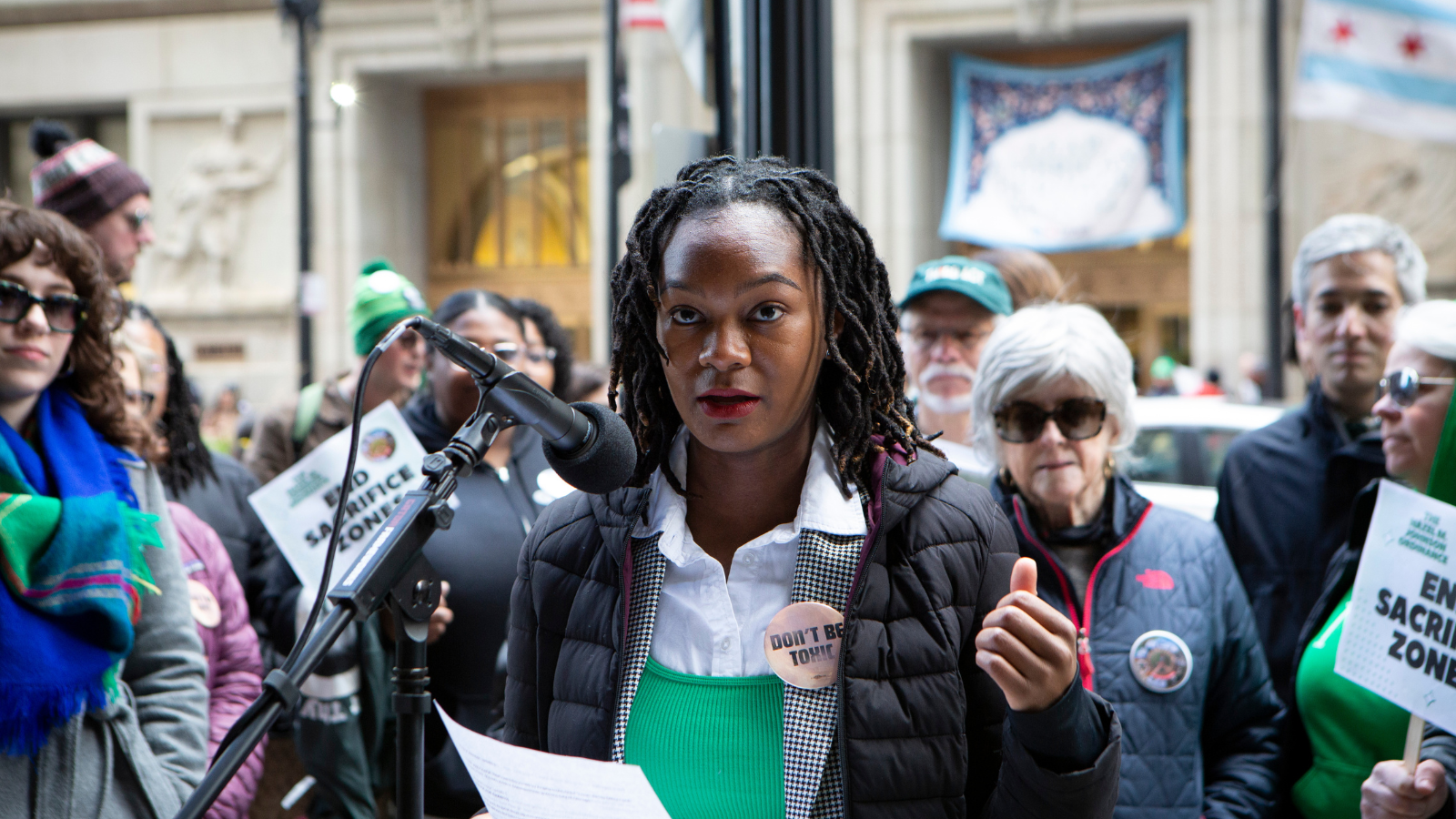
We know there are local elected officials who care, and we can fight alongside them. Whether it’s testifying at city council meetings, tracking legislation, or meeting directly with alders, local environmental advocacy matters. Our community expects the mayor and city council to prioritize the environment and environmental justice, advance ordinances backed by advocates, and use their offices to champion environmental initiatives.

Click each category to learn more.
Almost every resident in Chicago has experienced or been affected by urban flooding and basement backups, problems largely tied to overdevelopment and the City’s combined sewer system, which captures both waste and stormwater before sending it to treatment plants. As climate change accelerates, heavier and more frequent rainstorms increasingly overwhelm this system. Chicagoans witnessed this firsthand when the flooding in July and September 2023 and July 2025 left homes, predominantly on the West Side near suburbs submerged. Flooding brings serious health and financial hardships, from exposure to mold and sewage to lost work and school time, as well as damaged property, with the worst impacts concentrated in lower-income neighborhoods such as Chatham, Auburn Gresham, South Shore, West Englewood, Austin, and Chicago Lawn. Beyond flooded homes, excess water forces the sewer system to discharge stormwater, litter, and raw sewage into rivers and, in extreme cases, Lake Michigan. While the Metropolitan Water Reclamation District (MWRD) has constructed reservoirs capable of holding 3.5 billion gallons of rainwater through the Tunnel and Reservoir Plan (TARP), Chicago still faces flooded homes and yards, costly cleanups, and combined sewer overflows that limit the city’s ability to fully embrace its waterways as recreational and economic assets.
It is estimated that ⅛ of all lead service lines in the nation are in Illinois, with 412,000 in Chicago alone, and are more likely to be in working-class, Black, and Brown communities. The threat of lead in our drinking water is significant and disproportionately impacts children, leading to lower IQs, learning disabilities, and even violent behavior. It is estimated to cost up to $10-14 billion to replace all of them. And, for individual homeowners, the cost of replacing a lead pipe can reach up to $35,000—a price tag that’s simply out of reach for many.
Since 2010, Chicago’s water rates have quadrupled, leaving thousands of homeowners, predominantly in Black and low-income neighborhoods, unable to pay their water bills. As a result, many families have lost access to water, a basic necessity, and owe debt to the city. In total, Chicago homeowners owe $780 million in water debt. The City currently runs the Utility Billing Relief (UBR) program, which has helped low-income homeowners pay off their water debt. However, a water assistance program available to renters and a tiered water rate system are needed to ensure long-term water affordability. By expanding affordability programs and ending punitive debt collection practices, Chicago can ensure all residents maintain access to water while also helping residents repay what they can and allowing the city to recover long-term revenue.
A combination of historical redlining, current zoning laws and continual disinvestment have created communities where pollution is the expectation. From MAT Asphalt on the Southwest Side to General Iron’s attempt to move to the Southeast Side, and the community-led rejection of a new Confined Disposal Facility in South Chicago. These neighborhoods are disproportionately targeted as dumping grounds, and now face additional threats from the rise of e-commerce and artificial intelligence, which bring warehouses, data centers, and increased rail activity that worsen air quality through heavy diesel truck traffic and emissions.
- Hazel M. Johnson Cumulative Impacts Ordinance (2025): Named after Hazel M. Johnson, who is known as the “Mother of Environmental Justice” and founder of People for Community Recovery. She was a lifelong advocate against environmental racism, fighting to address pollution in Black and low-income communities. This ordinance would require new or expanding heavy industrial facilities to undergo a more thorough zoning process before receiving a permit. As part of the process, these facilities would be required to conduct a cumulative impact study to assess potential environmental and health impacts. These cumulative impact studies would be reviewed by a new Environmental Justice Advisory Board, a diverse group that would include members of communities historically impacted by pollution. IEC and environmental justice partners continue to work hard to pass the legislation.
The presence of nature within Chicago is directly connected to quality of life and the environment. We have seen a decrease in the amount of open spaces—parks, forest preserves, conservation areas, recreation areas—from Chicago’s rapid urbanization of surrounding areas. Chicago has one of the lowest metropolitan tree canopies and uneven tree distribution across the city is both an environmental and equity issue. Trees provide critical benefits—they reduce heating and cooling costs, increase property value, improve air quality, and help prevent flooding. Despite these benefits, funding for the Bureau of Forestry has remained stagnant (or declined) for the past five years. Without proper resources for tree maintenance and an updated Tree Inventory, Chicago risks further canopy loss, underscoring the urgent need to promote and preserve open spaces.
The growth of urban agriculture and the local food movement is a means for food sovereignty, economic development, and healthier communities. Therefore, we need to ensure that urban farmers have every opportunity to provide the city with fresh, local foods. Reliable, affordable access to city water is essential for a thriving urban agriculture community and healthy food access.
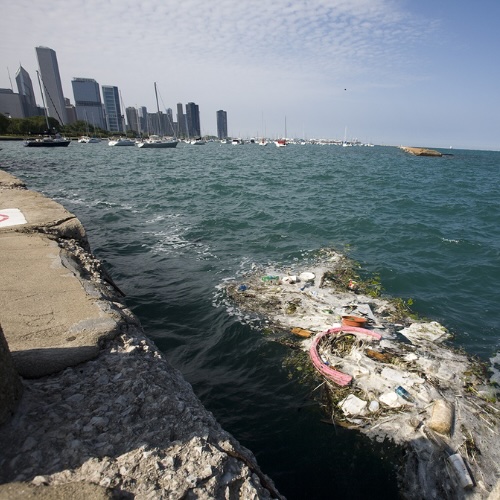
According to the 2021 Chicago Waste Strategy, the city generates more than 4 million tons of waste material yearly, and each year, 22 million pounds of plastic end up in the Great Lakes, with over half in Lake Michigan. While other cities have managed to divert nearly 80% from waste streams, only 10% of Chicago residential waste gets recycled; the remainder goes to landfills and in our streets, parks, the Chicago River, and the lakefront. When plastics enter our water, they do not disappear. They break into smaller and smaller pieces that harm wildlife and pollute our drinking water (including bottled water!).
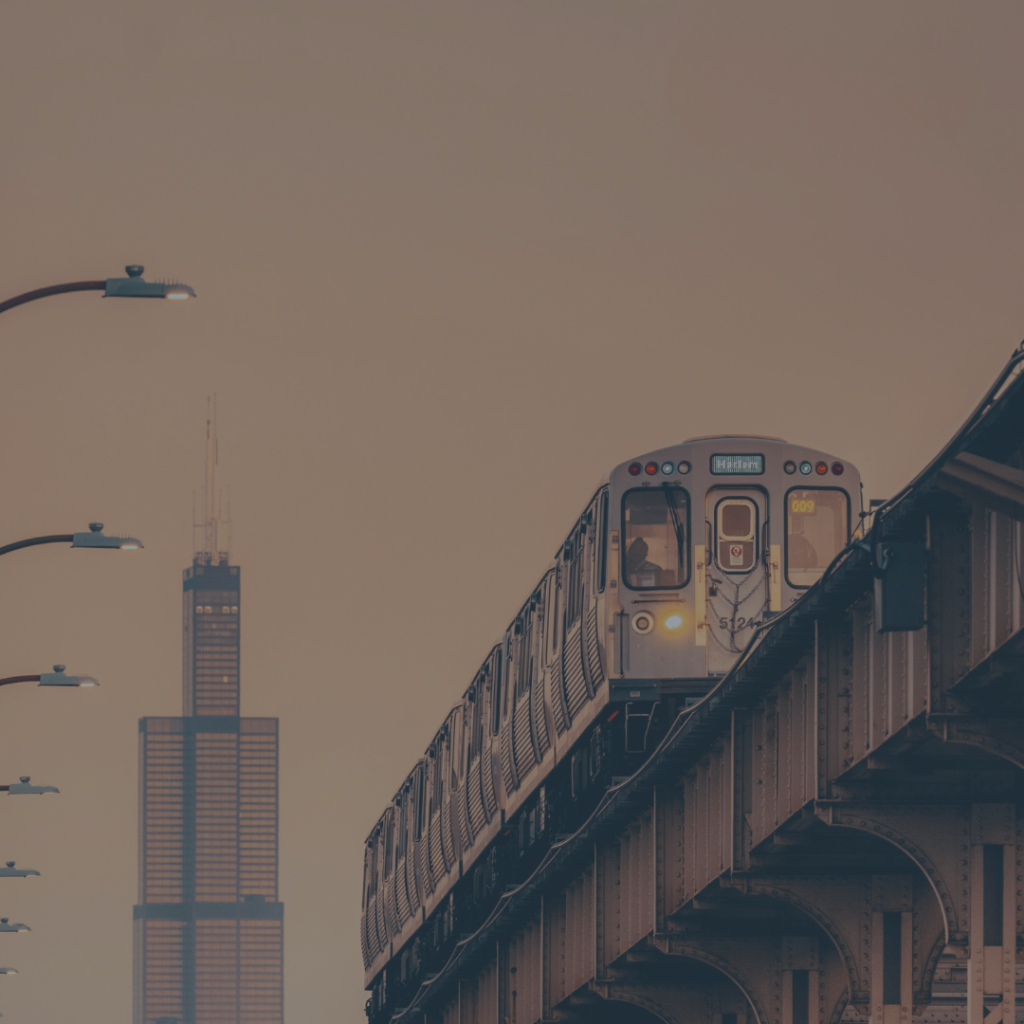
Chicago has historically struggled with air pollution and still fails to meet federal air quality standards for ozone smog. With a vast highway system, freight rail, CTA rail and bus, Metra commuter rail, and Amtrak interurban passenger rail, this city is a transportation and logistics hub. The 2.7 million residents of Chicago require fast, reliable ways to get around. We need to make the most environmentally friendly modes more attractive to increase the overall sustainability of our city. Yet, 31% of transit infrastructure is past its useful life. As bus speeds have been declining over recent years, people have been choosing less sustainable modes of transportation. To ensure we gain the greatest benefits from every precious tax dollar, we must invest our transportation dollars strategically and prioritize the most environmentally sustainable modes. Therefore, Chicago needs to invest in transportation infrastructure and plan for a City and a region that grows our economy, connects communities, and reduces public health threats.
As a City with a diverse and growing population, we need to ensure future generations are protected and provided with clean air. In January 2025, all of city-owned buildings and the O’Hare and Midway airports became fully powered by 100% renewable energy. Further eliminating our reliance on fossil fuels and instead turning to renewable energy can turn the city into a revolutionary energy powerhouse. By investing in community solar and phasing out fossil fuel appliances in homes, Chicago will become a national leader in clean energy.
Education, Advocacy, and Movement Building
IEC Chicago City Council Environmental Scorecard
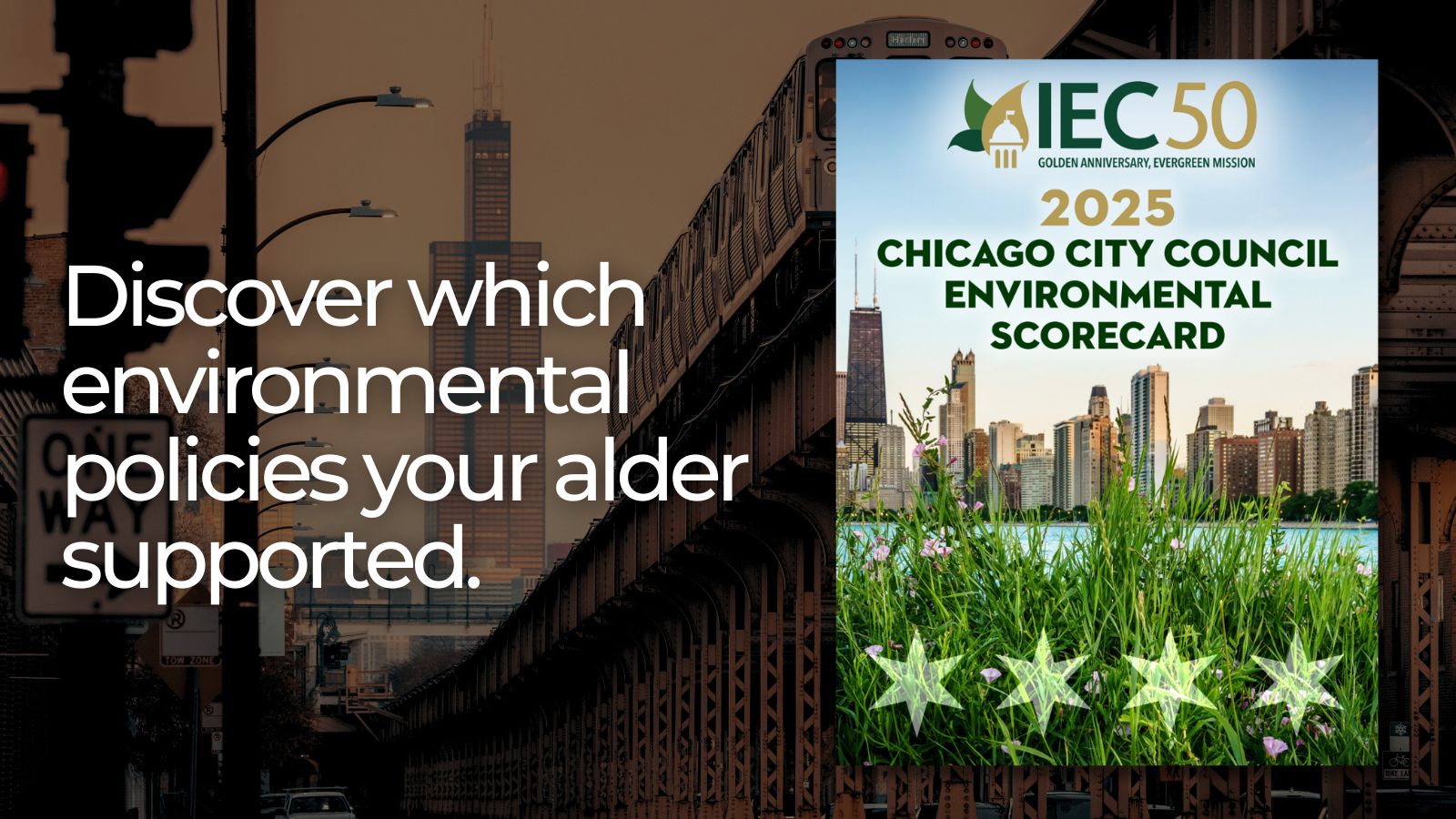
Since 2021, IEC has released a bi-annual scorecard evaluating how the sitting Mayor and alderpersons have acted on environmental issues. We’ve worked with our partners to grow and strengthen environmental momentum in City Hall. The scorecard is a valuable tool for Chicagoans. Help us hold your elected officials accountable to our communities.
Help us protect our city’s air, water, and land.
Alders Scoring 100% in 2025
- Daniel La Spata – 1
- Lamont Robinson – 4
- William Hall – 6
- Julia Ramirez – 12
- Jeylú Gutierrez- 14
- Derrick Curtis – 18
- Jeanette Taylor – 20
- Michael Rodriguez -22
- Byron Sigcho-Lopez – 25
- Jessie Fuentes – 26
- Rossana Rodriguez-Sánchez – 33
- Bill Conway – 34
- Carlos Ramirez-Rosa*
- Andre Vasquez – 40
- Timmy Knudsen -43
- Bennett Lawson – 44
- Angela Clay – 49
- Matt Martin – 47
- Leni Manaa-Hoppenworth – 48
- Maria Hadden – 49
Chicago Environmental Lobby Week
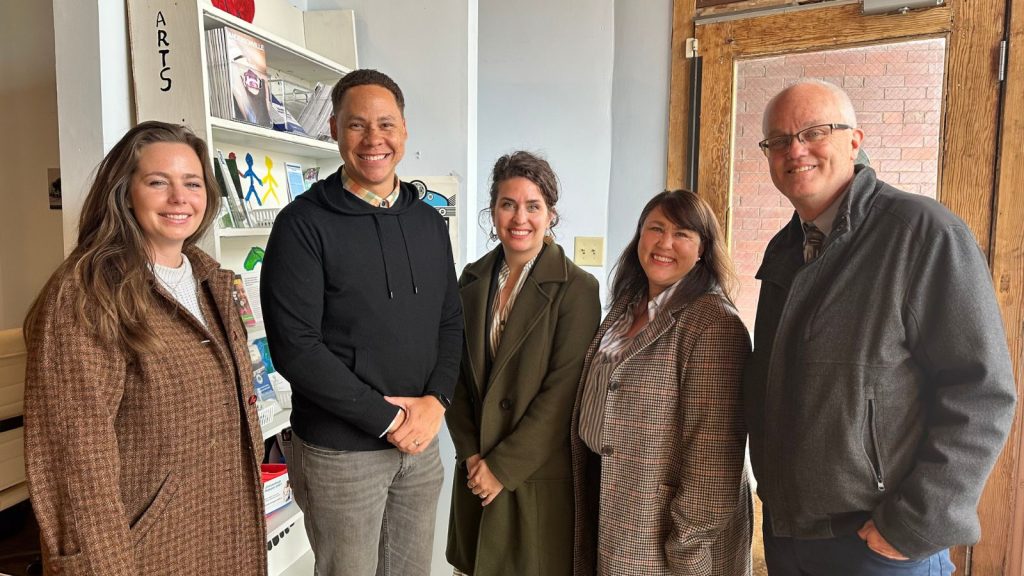
IEC has organized many lobby days at the Illinois State Capitol over the years. In 2025, we were thrilled to mobilize nearly 200 Chicagoans at the first-ever Chicago Environmental Lobby Week.
This event allowed Chicagoans to meet their alders, connect with their neighbors, and help advance city environmental policies. In the increasingly challenging federal political landscape, this was a wonderful opportunity to take action and make impactful changes at the local level.
Civics for Environmentalists: Chicago
Learn more about ELPC.
One of the key ways IEC carries out its mission is through education. For people to take action, they must be fully informed about the issues they care about and know how to translate those concerns into policy. In 2023, IEC launched our first-ever annual Civics for Environmentalists: Chicago! Like our state version, this webinar covers Chicago government. It explains how City Council works and how to build individual confidence to fight for local environmental causes.
Chicago Environmental Wins
Restoring the Chicago Department of Environment
Over a decade ago, the Emanuel Administration dissolved the city’s Department of Environment. This drastically cut the city’s ability to take bold climate action, stand up to polluters, and enforce sustainability initiatives. DOE responsibilities were spread thin among other city departments, like the Department of Public Health. However, since 2012, studies show at times a 50% drop in the inspection and enforcement of environmental regulations, which means our air, water, and soil are significantly less safe.
City advocates pushed for a new DOE during Mayor Lightfoot’s term. And, as power grew, continued advocacy during Mayor Johnson’s term. In 2023, we succeeded in officially reestablishing the department. That was a big first step, but our work continues as we fight for a department that can stand up to big polluters in our city. The next key step is returning enforcement power.
In October 2025, Mayor Johnson unveiled his proposed 2026 city budget, and we were thrilled to see that it includes returning enforcement power to the city’s DOE! This proposal comes at a critical time when the federal government is upending decades-old environmental laws, stepping back from civil rights agreements, and actively rescinding environmental justice funding.
Legislative Wins
Data Center Residency Ordinance (2024)
The original version of the ordinance encouraged the expansion of data storage in the City of Chicago without any environmental safeguards, despite the enormous amount of water and energy they consume. However, advocates quickly came together to urge the City Council to amend an ordinance. As a result, this ordinance now creates an environmental working group and a study that will develop environmental policy recommendations.
Electric Vehicle Charging Ordinance (2023)
Puts Chicago on a pathway to seamlessly begin requiring new state electric vehicle (EV) charging readiness standards (Public Act 103-0053) in addition to the City’s existing EV charging readiness requirements. Chicagoans can now charge their EVs at residential and commercial buildings more conveniently.
Chicago Energy Transformation Code (2022)
This ordinance is a significant update from the previously adopted 2019 Chicago Energy Conservation Code. It provides key advancements toward electrification, requires new buildings with gas appliances to be built with electrical capacity, new low-rise buildings designed to support solar panel installations, and incentivizes the use of smart heating and cooling to reduce energy demand during peak times.
Fossil Fuel Divestment Ordinance (2022)
City of Chicago Treasurer Melissa Conyears-Ervin proposed an ordinance that codifies the city’s divestment strategy, prohibiting the city from investing nearly $6.7 billion in assets associated with major fossil fuel companies.
Connected Communities Ordinance (2022)
Updates the city’s existing Transit-Oriented Development policy to promote more housing choices and affordability in transit-rich areas and provides more incentives for development near transit in disinvested communities and protects transit hubs from traffic violence.
Denial of General Iron Permit Resolution (2021)
In 2020, the City of Chicago approved a permit to allow a scrap‑metal shredding operation, with a poor environmental track record, to relocate from Lincoln Park to the Southeast Side, a community already burdened by industrial pollution. In protest, Southeast Side residents and groups, including the Southeast Environmental Task Force, went on a hunger strike and submitted this emergency petition calling for the denial of the requested permit. The City eventually denied the permit in 2022.
Urban Forestry Advisory Board (2021)
The health of our urban canopy is a huge part of our fight against climate change. This ordinance creates a city-appointed advisory board consisting of community leaders, technical experts, and advocates that guides the city’s efforts to expand and care for its tree canopy. The board advises on policies and programs that promote equity, sustainability, and resilience, ensuring that all neighborhoods benefit from healthy trees and green spaces.
Native Gardens Registry Ordinance (2021)
This ordinance creates a “ManagedNative Garden Registry,” allowing Chicagoans to register native plant gardens on their properties at no cost, shielding them from fines and citations under the Weeds ordinance. Prior to its passage, residents were receiving citations for using native plants, vegetable gardens, and tall grasses in their yards and parkways, with city inspectors focusing their efforts on disinvested communities struggling with vacant lots, leading to disproportionately more enforcement in the South and West sides.
Bird-friendly Design Ordinance (2020)
Amends the Sustainable Development Policy to provide greater weight and priority to strategies that reduce bird mortality resulting from new building construction.
EV Charging Readiness Ordinance (2019)
Requires all newly constructed residential buildings, with five or more units, and on-site parking and commercial properties, with 30 or more parking spaces, to have 20% of parking spaces Electric Vehicle Supply Equipment (EVSE) ready. All applicable properties must also make at least one EVSE-ready spaces accessible to people with disabilities.
City Team Highlight
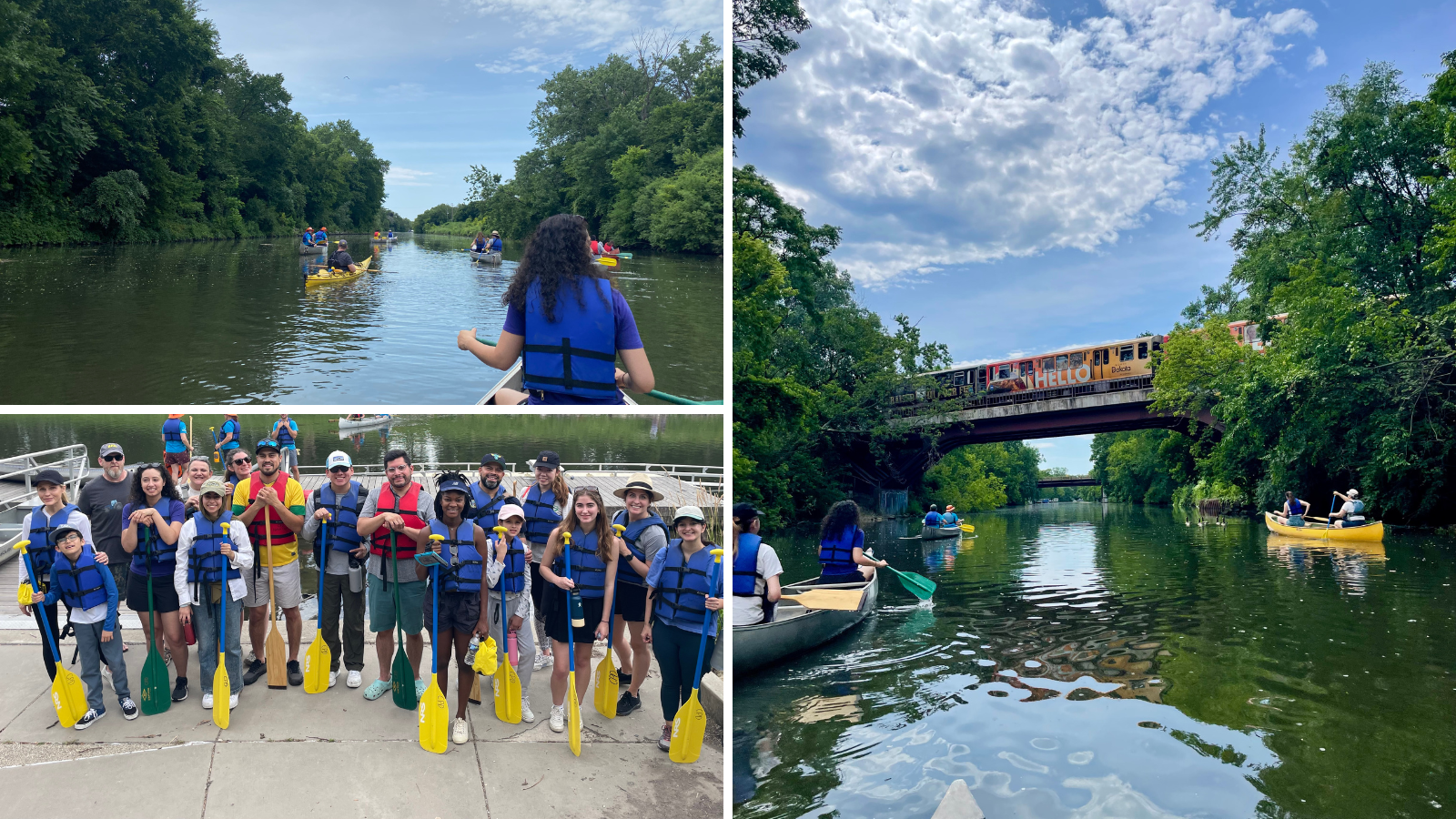
IECEF joined Friends of the Chicago River and Alderpersons Carlos Ramirez-Rosa and Andre Vasquez for a paddle along the North Branch of the Chicago River. Once reversed to protect Lake Michigan from pollution, the river now stands as a testament to decades of restoration and conservation work. Thanks to the efforts of IECEF affiliates like Friends of the Chicago River, the waterway has seen a remarkable return of wildlife and continues to provide vital environmental, economic, and social benefits to our city.
Reports & Analysis
Discover More
IEC's Chicago Experts
Jen Walling
Chief Executive Officer
Iyana Simba
City Government Affairs Director
Sergio Vargas
Chicagoland Conservation Policy Manager